Accendo Reliability

Your Reliability Engineering Professional Development Site

  • Home
  • About
    • Contributors
    • About Us
    • Colophon
    • Survey
  • Reliability.fm
    • Speaking Of Reliability
    • Rooted in Reliability: The Plant Performance Podcast
    • Quality during Design
    • CMMSradio
    • Way of the Quality Warrior
    • Critical Talks
    • Asset Performance
    • Dare to Know
    • Maintenance Disrupted
    • Metal Conversations
    • The Leadership Connection
    • Practical Reliability Podcast
    • Reliability Hero
    • Reliability Matters
    • Reliability it Matters
    • Maintenance Mavericks Podcast
    • Women in Maintenance
    • Accendo Reliability Webinar Series
  • Articles
    • CRE Preparation Notes
    • NoMTBF
    • on Leadership & Career
      • Advanced Engineering Culture
      • ASQR&R
      • Engineering Leadership
      • Managing in the 2000s
      • Product Development and Process Improvement
    • on Maintenance Reliability
      • Aasan Asset Management
      • AI & Predictive Maintenance
      • Asset Management in the Mining Industry
      • CMMS and Maintenance Management
      • CMMS and Reliability
      • Conscious Asset
      • EAM & CMMS
      • Everyday RCM
      • History of Maintenance Management
      • Life Cycle Asset Management
      • Maintenance and Reliability
      • Maintenance Management
      • Plant Maintenance
      • Process Plant Reliability Engineering
      • RCM Blitz®
      • ReliabilityXperience
      • Rob’s Reliability Project
      • The Intelligent Transformer Blog
      • The People Side of Maintenance
      • The Reliability Mindset
    • on Product Reliability
      • Accelerated Reliability
      • Achieving the Benefits of Reliability
      • Apex Ridge
      • Breaking Bad for Reliability
      • Field Reliability Data Analysis
      • Metals Engineering and Product Reliability
      • Musings on Reliability and Maintenance Topics
      • Product Validation
      • Reliability by Design
      • Reliability Competence
      • Reliability Engineering Insights
      • Reliability in Emerging Technology
      • Reliability Knowledge
    • on Risk & Safety
      • CERM® Risk Insights
      • Equipment Risk and Reliability in Downhole Applications
      • Operational Risk Process Safety
    • on Systems Thinking
      • The RCA
      • Communicating with FINESSE
    • on Tools & Techniques
      • Big Data & Analytics
      • Experimental Design for NPD
      • Innovative Thinking in Reliability and Durability
      • Inside and Beyond HALT
      • Inside FMEA
      • Institute of Quality & Reliability
      • Integral Concepts
      • Learning from Failures
      • Progress in Field Reliability?
      • R for Engineering
      • Reliability Engineering Using Python
      • Reliability Reflections
      • Statistical Methods for Failure-Time Data
      • Testing 1 2 3
      • The Hardware Product Develoment Lifecycle
      • The Manufacturing Academy
  • eBooks
  • Resources
    • Special Offers
    • Accendo Authors
    • FMEA Resources
    • Glossary
    • Feed Forward Publications
    • Openings
    • Books
    • Webinar Sources
    • Journals
    • Higher Education
    • Podcasts
  • Courses
    • Your Courses
    • 14 Ways to Acquire Reliability Engineering Knowledge
    • Live Courses
      • Introduction to Reliability Engineering & Accelerated Testings Course Landing Page
      • Advanced Accelerated Testing Course Landing Page
    • Integral Concepts Courses
      • Reliability Analysis Methods Course Landing Page
      • Applied Reliability Analysis Course Landing Page
      • Statistics, Hypothesis Testing, & Regression Modeling Course Landing Page
      • Measurement System Assessment Course Landing Page
      • SPC & Process Capability Course Landing Page
      • Design of Experiments Course Landing Page
    • The Manufacturing Academy Courses
      • An Introduction to Reliability Engineering
      • Reliability Engineering Statistics
      • An Introduction to Quality Engineering
      • Quality Engineering Statistics
      • FMEA in Practice
      • Process Capability Analysis course
      • Root Cause Analysis and the 8D Corrective Action Process course
      • Return on Investment online course
    • Industrial Metallurgist Courses
    • FMEA courses Powered by The Luminous Group
      • FMEA Introduction
      • AIAG & VDA FMEA Methodology
    • Barringer Process Reliability Introduction
      • Barringer Process Reliability Introduction Course Landing Page
    • Fault Tree Analysis (FTA)
    • Foundations of RCM online course
    • Reliability Engineering for Heavy Industry
    • How to be an Online Student
    • Quondam Courses
  • Webinars
    • Upcoming Live Events
    • Accendo Reliability Webinar Series
  • Calendar
    • Call for Papers Listing
    • Upcoming Webinars
    • Webinar Calendar
  • Login
    • Member Home
Home » LMS » Page 42

by Fred Schenkelberg Leave a Comment

Define

Lesson 13 of 14 Ways to Acquire
Reliability Engineering Knowledge
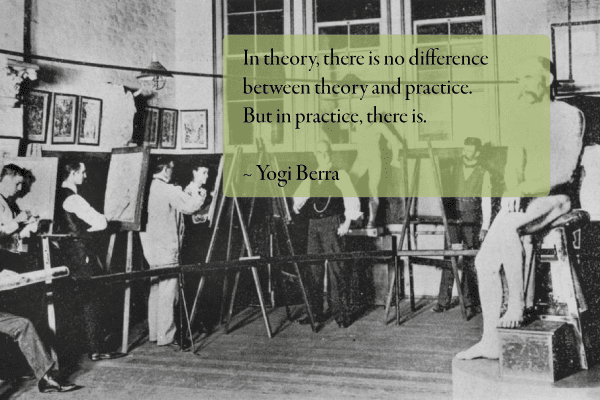
14 Ways lesson 13 image, Life drawing classes at the Brisbane Technical College, ca. 1900. Courtesy of State Library of Queensland, and quote by Yogi Berra, "In theory, there is no difference between theory and practice. But in practice, there is."
Life drawing classes at the Brisbane Technical College, ca. 1900. Courtesy of State Library of Queensland

[show_to accesslevel=’free’ duration=’91’]


The full lesson will become available 91 days after course registration.

In the meantime, organize your world. Which issues need attention and how do they break down?

[/show_to][hide_from visible_to=’public’]Please login with your site registration to view the lesson.

[login_form redirect=”https://fred-schenkelberg-project.prev01.rmkr.net/14-ways-acquire-reliability-engineering-knowledge/14warek-13/“]

If you haven’t registered, it’s free and takes only a moment.
[/hide_from][show_to accesslevel=’free’ delay=’91’ noaccess=’This lesson is available a week after the previous lesson.’]

You should think though and completely define the concepts and terms in reliability engineering. This is about being exact with your knowledge. Mastering what precisely is meant by, e.g., MTBF, ALT, life data, censoring, etc., helps us to know our subject.

Part of defining a subject may include the history. What is the origin of a particular model or technique? What problem was a particular technique created to solve? How has it developed over time? Definitions may also include listing best and worse practices for implementation or may involve defining situations where the particular tool is most useful.

Having ready definitions in mind will also enable you to compare definitions with your peers and learn from the differences. In reliability engineering there often is more than one way to define a term.


Next Week: Reason

Knowledge comes from our ability to reason. You can do this. Sort it out, find patterns and find conclusions.

In the meantime, organize your world. Which issues need attention and how do they break down?


[/show_to]
Save time and money as you master reliability engineering.

View Previous View Next

by Fred Schenkelberg Leave a Comment

Put in Order

Lesson 12 of 14 Ways to Acquire
Reliability Engineering Knowledge

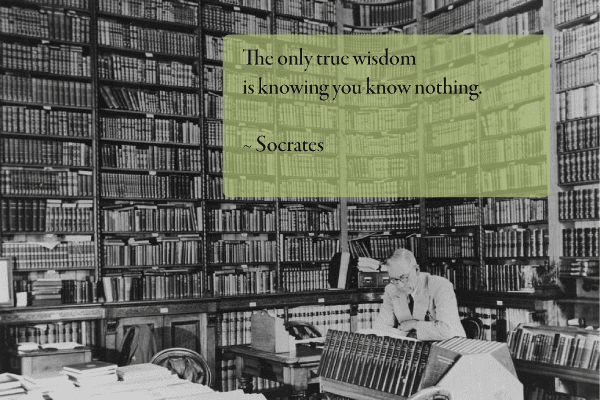
14 Ways lesson 12 image, Interior of Parliament House Library, Brisbane Queensland, 1949. Courtesy of State Library of Queensland, and quote by Socrates, "The only true wisdom is knowing you know nothing."
Interior of Parliament House Library, Brisbane Queensland, 1949. Courtesy of State Library of Queensland

[show_to accesslevel=’free’ duration=’84’]


The full lesson will become available 84 days after course registration.

In the meantime, do you know anyone that doesn’t understand MTBF? Help them.

[/show_to][hide_from visible_to=’public’]Please login with your site registration to view the lesson.

[login_form redirect=”https://fred-schenkelberg-project.prev01.rmkr.net/14-ways-acquire-reliability-engineering-knowledge/14warek-12/“]

If you haven’t registered, it’s free and takes only a moment.
[/hide_from][show_to accesslevel=’free’ delay=’84’ noaccess=’This lesson is available a week after the previous lesson.’]

Mangan advises putting your knowledge in order. Collect like pieces of information and sort knowledge by field or interest. Create a card catalog of your knowledge. This facilitates rapid recall of what you know. Such organizing can lead to finding meaningful relationships or patterns. For reliability this would include sorting field failures, understanding user environments, etc. We deal with mounds of information; by putting that information in order we often create knowledge.

When considering a range of different failures for a product, a common technique is to arrange the count of each type of failure in descending order by count on a bar chart or a Pareto chart. The order indicates the most common failures to the least common.

Mapping faulty parts on a circuit board is another example of a way of organizing data that can be useful for revealing mechanical or thermal-related failure causes. Such visualizations can reveal previously undetected issue.


Next Week: Define

What do you mean with those words or concepts? Be clear with your understanding especially with yourself, to be clear with others. Learn to define the problem which may lead to specific solutions.

In the meantime, do you know anyone that doesn’t understand MTBF? Help them.


[/show_to]

Save time and money as you master reliability engineering.

View Previous View Next

by Fred Schenkelberg 1 Comment

Observe

Lesson 11 of 14 Ways to Acquire
Reliability Engineering Knowledge

14 Ways lesson 11 image, Laboratory workers at the Ipswich Railway workshops. Courtesy of State Library of Queensland, with quote by Marie Curie, "Nothing in life is to be feared, only to be understood."
Laboratory workers at the Ipswich Railway workshops. Courtesy of State Library of Queensland

[show_to accesslevel=’free’ duration=’77’]


The full lesson will become available 77 days after course registration.

In the meantime, pay attention!

[/show_to][hide_from visible_to=’public’]Please login with your site registration to view the lesson.

[login_form redirect=”https://fred-schenkelberg-project.prev01.rmkr.net/14-ways-acquire-reliability-engineering-knowledge/14warek-11/“]

If you haven’t registered, it’s free and takes only a moment.
[/hide_from][show_to accesslevel=’free’ delay=’77’ noaccess=’This lesson is available a week after the previous lesson.’]

One of the best parts of being a reliability engineer is that everything fails! All around us, lamps, desks, chairs, books, computers, heating systems, cars, etc. are all products that have a finite lifetime.

We can see the environments in which these products are used and how those stresses affect these products and their performance. We can see people using products, appropriately and not so. We can see the impact of failure.

Just by observing we can learn a lot about how different designs work in a wide range of environments. Running our observations though the reliability engineering filter can be fun.

Another subject to observe when learning reliability engineering is people. How do people interact with products? What stresses do they apply to a product? What expectations do they have concerning a product? How do people try to troubleshoot or solve failures?

People watching can also include how one person influences another. This is part of improving your own influence skills. What works and what does not work to receive approval for a project or investment? What approach during a proposal presentation garners positive feedback and approval? What tactics work to change the behavior of a fellow engineer?

It’s a rich world of lessons out there, if we take time to observe.


Next Week: Put in order

The simple act of sorting and prioritizing may reveal what you need to know. Part of this activity is understanding each element of the problem you are trying to solve. You will learn here.

In the meantime, pay attention!


[/show_to]

Save time and money as you master reliability engineering.

View Previous View Next

by Fred Schenkelberg Leave a Comment

Listen

Lesson 10 of 14 Ways to Acquire
Reliability Engineering Knowledge

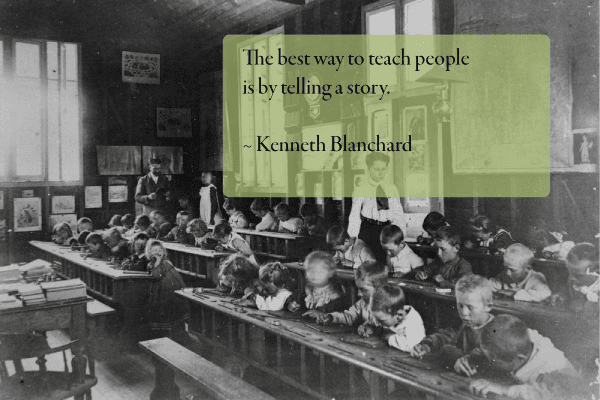
14 Ways lesson 10 image, Students and teachers in the classroom at Mount Beppo, Queensland, 1910. Courtesy of State Library of Queensland, and quote by Kenneth Blanchard, "The best way to teach people is by telling a story."
Students and teachers in the classroom at Mount Beppo, Queensland, 1910. Courtesy of State Library of Queensland

[show_to accesslevel=’free’ duration=’70’]


The full lesson will become available 70 days after course registration.

In the meantime, practice active listening. Pause our inner editor as you prepare your next volley, and hear and understand what is being said. Ask questions, breathe, and relax, there is plenty of time to listen and learn.

[/show_to][hide_from visible_to=’public’]Please login with your site registration to view the lesson.

[login_form redirect=”https://fred-schenkelberg-project.prev01.rmkr.net/14-ways-acquire-reliability-engineering-knowledge/14warek-10/“]

If you haven’t registered, it’s free and takes only a moment.
[/hide_from][show_to accesslevel=’free’ delay=’70’ noaccess=’This lesson is available a week after the previous lesson.’]

There times when your colleagues seem to only stop talking only to recharge their arguments. They are not really listening. By doing so, they are missing a chance to learn.

If we really stop and hear the person speaking, we may see a new point, make a new connection, or learn something. We should be open to really listening as other people have a different life path than we do—and certainly have learned much that we have not.

For reliability engineering, we need to listen to customers on what is and is not a failure and why, to engineers on what is and is not technically possible and why, and to managers on what is and is not supported (funded) and why.

Lucy Freedman in Smart Work (2nd Edition): The SYNTAX Guide to Influence address the art of listening. They provide tools to equip you to effectively detect the responses provided by your audience. They help you to listen and to detect whether you are communicating clearly and being understood. Their tools also help you listen attentively and with an open mind.
Actively Listen

Active listening takes practice—especially when you do not agree with the statements being made. Stop, breath, and summarize. Let the speaker know you are listening and that you are getting the main points. Additionally, ask questions. Relate what someone says to other projects or situations.

Learning by listening involves first actually hearing what someone else is saying. Then listen to understand the technical merit, the logical progression, the point of view, and the assumptions. Listen and learn.


Next Week: Observe

There is a lot going on in the world. Next week we discuss preparing to really observe and learn. If you think about what should happen, does that filter what you see? Probably, so also consider what could happen and prepare for surprising knowledge.

In the meantime, practice active listening. Pause our inner editor as you prepare your next volley, and hear and understand what is being said. Ask questions, breathe, and relax, there is plenty of time to listen and learn.

Previous lessons in the 14 Ways to Acquire


*Accendo Reliability participates in the Amazon Services LLC Associates Program. This affiliate advertising program provides a way for sites to earn a commission on links to Amazon. In short, this means when you buy something on Amazon after following a link from this site, we get a small percentage of its price. This helps support Accendo Reliability by offsetting a portion of the cost to maintain the site. And, your support is much appreciated.

[/show_to]

Save time and money as you master reliability engineering.

View Previous View Next

by Fred Schenkelberg Leave a Comment

Write

Lesson 9 of 14 Ways to Acquire
Reliability Engineering Knowledge

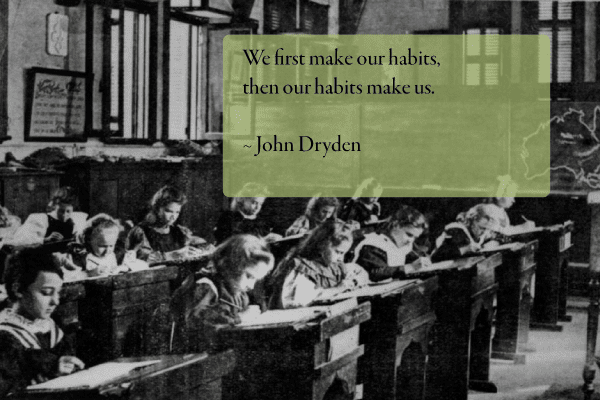
14 Ways lesson 9 image, Children in class at the Rockhampton Girls Grammar School, ca. 1895. Courtesy of State Library of Queensland, with quote by John Dryden, "We first make our habits, then our habits make us."
Children in class at the Rockhampton Girls Grammar School, ca. 1895. Courtesy of State Library of Queensland

[show_to accesslevel=’free’ duration=’63’]


The full lesson will become available 63 days after course registration.

In the meantime, start or continue writing. One idea is to outline the book you want to write. Then write each short section as a blog post. It’s a draft, and you can build an audience and gather feedback.

If you’d like to try a guest post on a blog, let me know. I’ve three blogs that almost come out weekly. I’d gladly consider a guest post (they often do much better than my posts, which is great.) About 500 words is perfect. Let’s get your work published.

If you have a longer work that you want published, and if it’s reliability related, again, let’s talk. I’ve the tools and know how to get your book published. I’m a publisher and focusing on works for the reliability community.

[/show_to][hide_from visible_to=’public’]Please login with your site registration to view the lesson.

[login_form redirect=”https://fred-schenkelberg-project.prev01.rmkr.net/14-ways-acquire-reliability-engineering-knowledge/14warek-9/“]

If you haven’t registered, it’s free and takes only a moment.
[/hide_from][show_to accesslevel=’free’ delay=’63’ noaccess=’This lesson is available a week after the previous lesson.’]

Like teaching and get-it-from-yourself approaches combined, writing let’s you capture what you know.

Writing allows you to explore a subject, ponder, question, theorize, and discuss. Writing a daily journal can be helpful. If nothing else, the daily writing practice helps you describe ideas and concepts important to you.

You Already Write

As a reliability professional you will write reliability plans, recommendations, requests for resources, test plans, and reports. Writing articles, white papers, blog posts, or a book is like teaching, only the delivery is dependent on written material. Writing to explain or influence provides a way for you to consider what you know and need to know about a subject. It helps you to focus your reading and encourages more experiments.

Writing also slows you down to see the logic, information, and ideas and allows you to review and reorganize. Writing exposes what you know and do not know.

Write Regularly

Writing does take discipline and practice. Use basic English, clear active voice, and the language of your reader (which might just be you, or your peers, or another audience). Write plainly to remove the barriers to understanding both for yourself and your readers.

Pay attention the questions that come up as you write. Keeping a notepad handy to list questions can be helpful. Writing on one topic often sparks ideas or other topics of interest. Capturing the idea helps you to avoid the distraction from the writing task at hand. Keep notes on other topics to write (and learn) about and review these occasionally when considering new writing projects.

Writing an online blog does two things:

  1. Regularly writing on a topic of interest allows you to explore and learn the topic in detail.
  2. It helps you build and demonstrate mastery of the topic.

If considering a blog one idea is to outline a book on a topic, then write blog articles for each section. The blog articles do not have to be in order, which allows you to write on the specific topic of interest. Yet before long you will have a first draft of a book on the topic. You will have mastered the topic by “writing the book.”


Next Week: Listen

Do you truly listen? It’s not common. Next week let’s talk about how much you can learn by actively listening to your peers, colleagues, friends, and adversaries.

In the meantime, start or continue writing. One idea is to outline the book you want to write. Then write each short section as a blog post. It’s a draft, and you can build an audience and gather feedback.

If you’d like to try a guest post on a blog, let me know. I’ve three blogs that almost come out weekly. I’d gladly consider a guest post (they often do much better than my posts, which is great.) About 500 words is perfect. Let’s get your work published.

If you have a longer work that you want published, and if it’s reliability related, again, let’s talk. I’ve the tools and know how to get your book published. I’m a publisher and focusing on works for the reliability community.


[/show_to]

Save time and money as you master reliability engineering.

View Previous View Next

by Fred Schenkelberg 2 Comments

Read

Lesson 8 of 14 Ways to Acquire
Reliability Engineering Knowledge

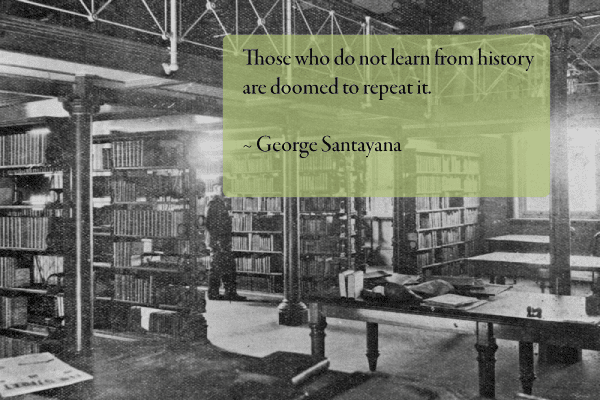
14 Ways lesson 8 image, State Library of Queensland's reading room, Brisbane, 1902. Courtesy of State Library of Queensland, with quote by George Santayana, "Those who do not learn from history are doomed to repeat it."
State Library of Queensland’s reading room, Brisbane, 1902. Courtesy of State Library of Queensland

[show_to accesslevel=’free’ duration=’56’]


The full lesson will become available 56 days after course registration.

In the meantime, hit the books. Find a set of books that you’d like to read this year. Set time aside on a regular basis to read. Absorb the knowledge that is out there. Take notes. Write in the margins. Learn something.

Check out a dozen blogs and subscribe to ones you find useful and informative. It would be great is you like the three I write (no pressure 😉

CREprep.wordpress.com short tutorials and advice for those preparing for the ASQ CRE exam, or just wanting to stay sharp with reliability engineering skills.

NoMTBF.com a site devoted to eradicate the use of MTBF, plus clear up other commonly misunderstood reliability concepts

The Accendo Reliability Articles section is a regular blog on a wide range of topics related to reliability engineering and management. Articles include Musings on reliability and maintenance topics by Fred Schenkelberg, and Managing in the 2000’s by Tim Rodgers.

[/show_to][hide_from visible_to=’public’]Please login with your site registration to view the lesson.

[login_form redirect=”https://fred-schenkelberg-project.prev01.rmkr.net/14-ways-acquire-reliability-engineering-knowledge/14warek-8/“]

If you haven’t registered, it’s free and takes only a moment.
[/hide_from][show_to accesslevel=’free’ delay=’56’ noaccess=’This lesson is available a week after the previous lesson.’]

The United States Library of Congress has about 3 petabytes of reading material. Although that is only a fraction of the world’s knowledge, it is the work that has been edited, reviewed, and published. If you want to learn something you probably can find it and read it.

For reliability professionals, there is a growing collection of books, blogs, newsletters, and websites that have useful information. You can find the listing of reliability professional development reading materials at the site www.reliabilitycalendar.org/reading/.

A recommended reading list for reliability professionals should include a basic handbook that covers a broad range of reliability topics, a comprehensive statistics text, and a reliability statistics text. You may also benefit from industry-specific references that cover material science, process methods, or design considerations, for example.

If you are new to reliability engineering or want to refresh your knowledge you can find introductory material, examples, and “how to” tutorials online. One example is the creprep.wordpress.com site with mini-tutorials covering specific topics in the American Society for Quality Certified Reliability Engineer certification body of knowledge. Another example is the National Institute of Standards and Technology Engineering Statistics Handbook, which provides an online textbook covering basic and advanced statistics, including examples.

Well-rounded professionals should read inside and outside their field. Business journals, trade magazines, and reliability engineering blogs help you build connections and ideas.

When reading to learn, according to current research, it is considered best practice to read then quiz yourself.[4] Can you recall what you have read? Write down the key points and then check whether you got them all. Do not simply read, highlight, then read again; this process is not as effective as using flash cards or quizzing yourself.


Next Week: Write

Have you wanted to write a book? Not only will you become a recognized authority, you’ll actually learn a lot while writing. Even a short article or blog post provides a great opportunity to master a topic.

In the meantime, hit the books. Find a set of books that you’d like to read this year. Set time aside on a regular basis to read. Absorb the knowledge that is out there. Take notes. Write in the margins. Learn something.

Check out a dozen blogs and subscribe to ones you find useful and informative. It would be great is you like the three I write (no pressure 😉

CREprep.wordpress.com short tutorials and advice for those preparing for the ASQ CRE exam, or just wanting to stay sharp with reliability engineering skills.

NoMTBF.com a site devoted to eradicate the use of MTBF, plus clear up other commonly misunderstood reliability concepts

The Accendo Reliability Articles section is a regular blog on a wide range of topics related to reliability engineering and management. Articles include Musings on reliability and maintenance topics by Fred Schenkelberg, and Managing in the 2000’s by Tim Rodgers.


[/show_to]

Save time and money as you master reliability engineering.


View Previous View Next

by Fred Schenkelberg

Teach

Lesson 7 of 14 Ways to Acquire
Reliability Engineering Knowledge

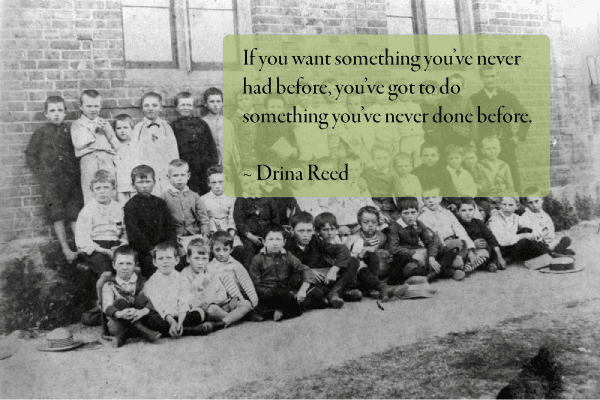
14 Ways lesson 7 image, Group photograph of teacher and students of Ipswich Central State School, 1889. Courtesy of State Library of Queensland, with quote by Drina Reed, "If you want something you've never had before, you've got to do something you've never done before."
Group photograph of teacher and students of Ipswich Central State School, 1889. Courtesy of State Library of Queensland

[show_to accesslevel=’free’ duration=’49’]


The full lesson will become available 49 days after course registration.

In the meantime, time to refine your presentation or seminar to make sure your audience understands your main points. Online teaching takes many forms, and you can begin teaching on many platforms. For example, SkillShare or Udemy provide a great platform for anyone to begin teaching.

Sign up to offer a webinar or seminar. You could talk about reliability topic of your choice as part of the Accendo Reliability Webinar series.

If you have a course you’d like to offer, let’s talk about putting on this site. The tools are all here and I’ll help you prepare and produce your set of lessons.

[/show_to][hide_from visible_to=’public’]Please login with your site registration to view the lesson.

[login_form redirect=”https://fred-schenkelberg-project.prev01.rmkr.net/14-ways-acquire-reliability-engineering-knowledge/14warek-7/“]

If you haven’t registered, it’s free and takes only a moment.
[/hide_from][show_to accesslevel=’free’ delay=’49’ noaccess=’This lesson is available a week after the previous lesson.’]

As a reliability professional, we often have to explain reliability terms, techniques, and findings to our colleagues. We are teachers. If you have to explain something to someone else, you first have to master the subject.

Years ago I learned design of experiments by signing up to teach it to our engineering group. I was barely one step ahead of my classmates, yet, by the end, I had mastered the topic and continue to this day to draw on that knowledge.

Master a Subject to Explain It Clearly

It takes practice to explain a concept or procedure clearly.

There are many ways to do so. It can be helpful to pay attention to how you learn a subject. Convey what is needed for someone new to the topic, such that it meets that person’s needs (not yours!). One technique is to describe the reason or expected results, then back up to how to use the concept to solve the issue.

Another is to present a problem, let the student struggle with the issue, and then let (guide if necessary) the student discover a solution. There are other methods, yet the idea is to learn how to teach by monitoring how you learn.

We are generally trying to solve real-life problems with what we learn. Teaching others to solve problems forces you to consider the types of problems that need solving. Teaching allows you to experience the new knowledge in many ways and with many situations—which further cements the new information in memory.

In her book Design for How People Learn (2nd Edition) (Voices That Matter), Julie Dirksen describes the learner’s journey and the teacher’s role in the process the student encounters while learning. Based on research the book examines ways to enhance your teaching style with the content to improve the transfer of knowledge. As you teach and learn a new topic, also study how you teach. The works of Julie Dirksen and others provide a framework to assist you to excel in your teaching and learning through teaching.


Next Week: Read

I’m sure you have studied the ebooks on the Accendo Reliability site. You most likely have a few goto reference books. So, what have your read professionally lately?

In the meantime, time to refine your presentation or seminar to make sure your audience understands your main points. Online teaching takes many forms, and you can begin teaching on many platforms. For example, SkillShare or Udemy provide a great platform for anyone to begin teaching.

Sign up to offer a webinar or seminar. You could talk about reliability topic of your choice as part of the Accendo Reliability Webinar series.

If you have a course you’d like to offer, let’s talk about putting on this site. The tools are all here and I’ll help you prepare and produce your set of lessons.


*Accendo Reliability participates in the Amazon Services LLC Associates Program. This affiliate advertising program provides a way for sites to earn a commission on links to Amazon. In short, this means when you buy something on Amazon after following a link from this site, we get a small percentage of its price. This helps support Accendo Reliability by offsetting a portion of the cost to maintain the site. And, your support is much appreciated.

[/show_to]

Save time and money as you master reliability engineering.

by Fred Schenkelberg

Experiment

Lesson 6 of 14 Ways to Acquire
Reliability Engineering Knowledge

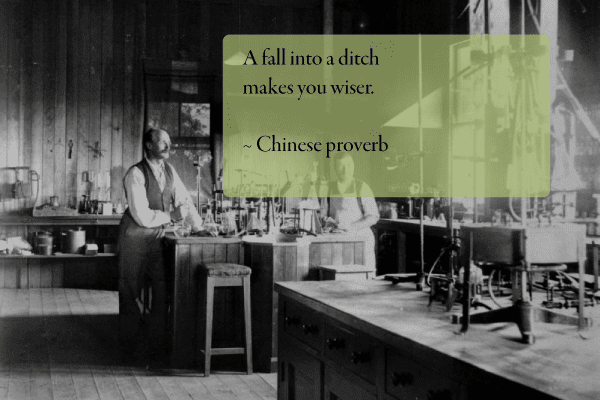
14 Ways lesson 6 image, Chemistry laboratory, probably at Gatton Agricultural College, Queensland. Courtesy of State Library of Queensland, and quote by Chinese proverb, "A fall into a ditch makes you wiser."
Chemistry laboratory, probably at Gatton Agricultural College, Queensland. Courtesy of State Library of Queensland

[show_to accesslevel=’free’ duration=’42’]


The full lesson will become available 42 days after course registration.

In the meantime, you probably have plenty of ideas for experiments. Some quick and easy. Do them. Some may take significant planning and resources. Get started.

Experiments are a great way to practice your statistics. Sample size, hypothesis testing, confidence intervals, design of experiments, all tools that you can master as you conduct meaningful experiments.

[/show_to][hide_from visible_to=’public’]Please login with your site registration to view the lesson.

[login_form redirect=”https://fred-schenkelberg-project.prev01.rmkr.net/14-ways-acquire-reliability-engineering-knowledge/14warek-6/“]

If you haven’t registered, it’s free and takes only a moment.
[/hide_from][show_to accesslevel=’free’ delay=’42’ noaccess=’This lesson is available a week after the previous lesson.’]

When I was just starting my industry career as a manufacturing engineer my boss encouraged everyone on the team to do an experiment every day. Some were simple observations but at times they involved complex design of experiments.

We had to form a hypothesis and test it every day. He knew most of the experiments would not be useful, yet each one taught us a bit more about the factory and how it operated.

Although running good experiments is a skill, with deliberate practice you can improve. Yet even simple experiments, such as using a new technique for brainstorming during your next failure mode and effects analysis, may reveal a great new tool or at least an opportunity to learn. In the introduction to design of experiments in the book Statistics for Experimenters: Design, Innovation, and Discovery, 2nd Edition, the authors outline experiments as a series of thoughtful steps to refine and discover the solution.
Experiment to Learn

The same holds true for education: The more you know, the better your questions become, which opens up even more opportunities for experiments. Learn by experimenting with your knowledge and observations.

As a judge for a grade school science fair I have seen plenty of volcano diagrams and soil variations on plant growth experiments. One student explored muscle memory for throwing or kicking a baseball or soccer ball. Her hypothesis was that the baseball players would have better muscle memory abilities than soccer players when throwing a baseball.

She described a simple experiment and the results. She had enthusiasm for continuing experiments; as she learned more, she wanted to know more. In the science fair interview she described three more experiments that she had already explored on topics that arose from the first experiment. She had a topic of interest and had just learned that she can do experiments to learn.

That was exciting.


Next Week: Teach

You are teaching when explaining a reliability concept to a colleague. Often when making a presentation you are educating your audience. Next week we’ll talk about how we have to master a topic to teach it well.

In the meantime, you probably have plenty of ideas for experiments. Some quick and easy. Do them. Some may take significant planning and resources. Get started.

Experiments are a great way to practice your statistics. Sample size, hypothesis testing, confidence intervals, design of experiments, all tools that you can master as you conduct meaningful experiments.


*Accendo Reliability participates in the Amazon Services LLC Associates Program. This affiliate advertising program provides a way for sites to earn a commission on links to Amazon. In short, this means when you buy something on Amazon after following a link from this site, we get a small percentage of its price. This helps support Accendo Reliability by offsetting a portion of the cost to maintain the site. And, your support is much appreciated.

[/show_to]

Save time and money as you master reliability engineering.

by Fred Schenkelberg

Walk around it

Lesson 5 of 14 Ways to Acquire
Reliability Engineering Knowledge

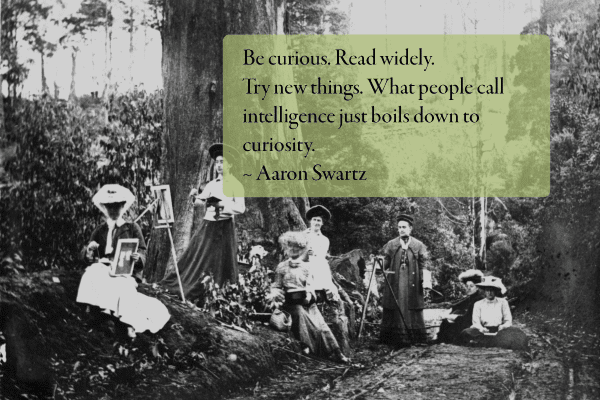
14 Ways lesson 5 image, Sketch party in a scenic location outside Brisbane, Queensland. Courtesy of State Library of Queensland, and quote by Aaron Swartz, "Be curious. Read widely. Try new things. What people call intelligence just boils down to curiosity."
Sketch party in a scenic location outside Brisbane, Queensland. Courtesy of State Library of Queensland

[show_to accesslevel=’free’ duration=’35’]


The full lesson will become available 35 days after course registration.

In the meantime, practice keeping an open mind. Note when your defense come up, and what triggered the reaction. Learn to notice when you’re shutting down a chance to learn.

Ask yourself if there is another way to view this subject or problem. It takes practice. Set reminders for yourself as you work to master this behavior.

[/show_to][hide_from visible_to=’public’]Please login with your site registration to view the lesson.

[login_form redirect=”https://fred-schenkelberg-project.prev01.rmkr.net/14-ways-acquire-reliability-engineering-knowledge/14warek-5/“]

If you haven’t registered, it’s free and takes only a moment.
[/hide_from][show_to accesslevel=’free’ delay=’35’ noaccess=’This lesson is available a week after the previous lesson.’]

Mangan tells us to keep an open mind, consider both sides from all angles, and examine each new object or situation with an open mind and be willing to learn from the many points of view. For reliability we often observe a rush to solution during failure analysis work.

Stop, walk around the problem, and examine the problem including all the information. Fully understand the problem before selecting a solution. You will no doubt learn something and likely find a better solution.

Same advice applies when interacting with your colleagues. Although physically walking around them with a steady gaze may be inappropriate, you can learn by exploring how they see the world. What is important to them about reliability? How do they fit into the reliability program?

A Motor Failure

An example may illustrate this method of learning. Consider the situation where a motor has failed within a printer. The immediate solution may be the replacement of the motor or finding a stronger motor to use as a replacement. Before replacing the failed motor, take the time to walk around it to explore why the motor failed and the cause leading to the failure. Examine the operation of the motor including:

  • the mechanical attachment and location,
  • the electrical elements and supply, and
  • the general environment, including temperature, dust, etc.

In this case we found a faulty drive circuit causing high torque and excessive heating, which leads to the failure within the motor. Replacing the motor would not address the issue and we learned by exploring around the subject and looking for the many possible stresses and interactions involved with the motor operation.

A Marble Quarry Problem

Henry Petroski in Design Paradigms: Case Histories of Error and Judgment in Engineering describes a common design team mistake for which the concept of walking around it would help solve. Petroski describes a marble quarry in ancient days commissioned to deliver a 6-m-long column in a single piece of marble. Up till this request, marble blanks were no longer than 3 m and could be safely supported off the ground with a timber placed under each end of the marble. A quarryman commented that the unsupported mid-section may be sufficient to crack the beam as it bowed under its own weight between the two supports.
The team considered the issue and, to solve the bowing problem, decided to add a third timber under the center of the column blank. In the morning the blank had a crack which ruined the piece. The crack was on the top of the beam over the center support. The team did not consider other failure mechanisms, such as uneven settling of the supporting timbers that could created a diving-board structure. Solving the bowing issue created another failure possibility.

Considering the impact on the overall system with a local change is a form of walking around it. It is a way to learn.

A Simple Tool

The cause-and-effect diagram (Ishikawa or fishbone diagram) is a tool useful when attempting to consider many elements that surround an issue or topic. To create the diagram, start with the issue (failure mode or symptom), then create a branching structure with major elements of the device, process, or category of potential causes.

Finally, off the category lines, add smaller branches for variables or detailed potential causes. The cause-and-effect diagram aids a group in considering the many potential causes for a failure. Once it is populated the next step is to consider the most likely causes and either conduct confirming experiments or explore possible controls or solutions. The diagram helps one explore and learn about possible failure causes.

Walk around it is a way to learn by being open to new information. Changing your point of view, considering alternatives, assessing the impact are all ways to prepare yourself to learn.


Next Week: Experiment

Bring out the mad scientist in you as you form hypothesis to test. Try alternatives, see what happens with a small change. For product testing, what are the limits? Have fun.

In the meantime, practice keeping an open mind. Note when your defense come up, and what triggered the reaction. Learn to notice when you’re shutting down a chance to learn.

Ask yourself if there is another way to view this subject or problem. It takes practice. Set reminders for yourself as you work to master this behavior.


*Accendo Reliability participates in the Amazon Services LLC Associates Program. This affiliate advertising program provides a way for sites to earn a commission on links to Amazon. In short, this means when you buy something on Amazon after following a link from this site, we get a small percentage of its price. This helps support Accendo Reliability by offsetting a portion of the cost to maintain the site. And, your support is much appreciated.

[/show_to]

Save time and money as you master reliability engineering.

by Fred Schenkelberg

Get it from yourself

Lesson 4 of 14 Ways to Acquire
Reliability Engineering Knowledge

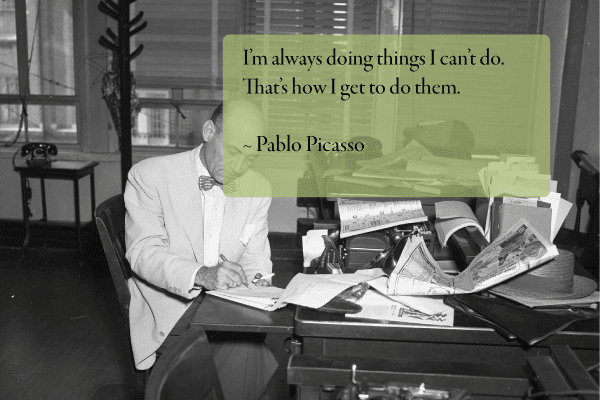
14 Ways lesson 4 image, Neal Douglass. Man Working at Desk, 1949. Courtesy of Austin History Center, Austin Public Library, Austin, Texas, and quote by Pablo Picasso, "I'm always doing things I can't do. That's how I get to do them."
Neal Douglass. Man Working at Desk, 1949. Courtesy of Austin History Center, Austin Public Library, Austin, Texas

[show_to accesslevel=’free’ duration=’28’]


The full lesson will become available 28 days after course registration.

In the meantime, get a notebook and pen and start ‘morning pages’. Stay with it for at least a week. Note how your day goes and if you have greater creativity and clarity.[/show_to][hide_from visible_to=’public’]Please login with your site registration to view the lesson.

[/show_to][hide_from visible_to=’public’]Please login with your site registration to view the lesson.

[login_form redirect=”https://fred-schenkelberg-project.prev01.rmkr.net/14-ways-acquire-reliability-engineering-knowledge/14warek-4/“]

If you haven’t registered, it’s free and takes only a moment.
[/hide_from][show_to accesslevel=’free’ delay=’28’ noaccess=’This lesson is available a week after the previous lesson.’]

Given all the classes you have taken though school and your professional life, it is amazing how much you have been exposed to areas across the fields of science, math, language, etc.

You really should know quite a bit. Refine and refresh what you know.

Review, recall, and relive what you already know. For reliability engineers this may include reflection, journaling, and discussions about your favorite topics from your past. You probably have a treasure trove of experiences that may provide continued insight and inspiration.

Write (draw) it out of yourself

Mark Bryan, et. al. in The Artist’s Way at Work: Riding the Dragon prescribes writing longhand three pages per day each and every morning. These “morning pages” allow you to focus, explore, discuss, plan, and contemplate what is already in your head. They help you to organize your thoughts, create “to-do” lists, explore interests, formulate ideas, etc.

To start morning pages, wake up a little earlier than normal and while it is quiet write, in longhand, three standard college notebook paper pages. The writing has no goal or purpose other than to provide a stream-of-consciousness output. Write about what you are thinking.

For writing morning pages adhere to these rules:

  1. Always write three pages each day (not six today and none tomorrow).
  2. Never show them to anyone else.
  3. Do not reread or edit them.
  4. To-do lists can be included.

Another technique to learn from yourself when considering a topic is to recall previous times when you addressed similar topics. What did you learn then that may be useful today? This works well on problem-solving approaches.

You already have a wealth of knowledge. A little reflection and clarity will help you learn from what you already know.


Next Week: Walk around it

Basically keep an open mind. As needed shift your point of view or frame of reference. Maybe even actually walk around an object.

In the meantime, get a notebook and pen and start ‘morning pages’. Stay with it for at least a week. Note how your day goes and if you have greater creativity and clarity.


*Accendo Reliability participates in the Amazon Services LLC Associates Program. This affiliate advertising program provides a way for sites to earn a commission on links to Amazon. In short, this means when you buy something on Amazon after following a link from this site, we get a small percentage of its price. This helps support Accendo Reliability by offsetting a portion of the cost to maintain the site. And, your support is much appreciated.

[/show_to]

Save time and money as you master reliability engineering.

by Fred Schenkelberg

Desire

Lesson 3 of 14 Ways to Acquire
Reliability Engineering Knowledge

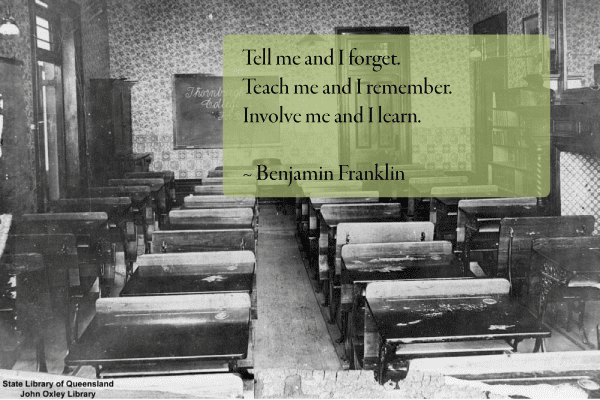
14 Ways Lesson 3 image, Interior of a classroom at the Thornburgh College, Charters Towers, ca. 1920. Courtesy of State Library of Queensland, and quote by Benjamin Franklin, " Tell me and I forget. Teach me and I remember. Involve me and I learn."
Interior of a classroom at the Thornburgh College, Charters Towers, ca. 1920. Courtesy of State Library of Queensland

[show_to accesslevel=’free’ duration=’21’]


The full lesson will become available 21 days after course registration.

In the meantime, consider what you would like to learn. What do you want to master?

What would your life be like when you are the recognized expert in your field? Make that picture clear, make it compelling. Then let’s go about making it happen.

[/show_to][hide_from visible_to=’public’]Please login with your site registration to view the lesson.

[login_form redirect=”https://fred-schenkelberg-project.prev01.rmkr.net/14-ways-acquire-reliability-engineering-knowledge/14warek-3/“]

If you haven’t registered, it’s free and takes only a moment.
[/hide_from][show_to accesslevel=’free’ delay=’21’ noaccess=’This lesson is available a week after the previous lesson.’]

There is an old joke about how to eat an elephant. The response is “one bite at a time.” Analogously, for those facing a large project or challenge, getting the job done entails taking just one step at a time. As you face challenges or projects that may require learning, you have the desire to complete the project and achieve the results. It is this motivation that forms basis for the desire to learn.

It is essential to have at least some desire to learn. You could learn to read music, yet without the desire to play an instrument or sing, you probably will not retain what you have learned nor put it to use. If you want to be a reliability engineer, then you have the desire and it is time to start that journey.

Form Your Future Vision

What is your end goal? What do you want to accomplish?

Visualize the perfect day at some point in the future. See, feel, hear, and smell the results. Understanding the result helps you in several ways.

First, it helps you recognize the value or importance of achieving your goal, in this case obtaining reliability engineering knowledge.

Second, it helps you to see past the barriers and obstacles. With the beneficial results in mind, the path to overcome the obstacles may be easier to find. With the goal in mind, you will be able to identify opportunities that lead toward your goal, while remaining focused in the pursuit of your goal.

Third, it helps you to articulate what you want to learn and why. Those you tell may join you on the journey.


Next Week: Get it from yourself

Stop and think about all the classes, books, webinars, etc. that you’ve experienced. You know quite a bit of stuff, so learning to tap that knowledge and keep it fresh is in the next lesson.

In the meantime, consider what you would like to learn. What do you want to master?

What would your life be like when you are the recognized expert in your field? Make that picture clear, make it compelling. Then let’s go about making it happen.


[/show_to]

Save time and money as you master reliability engineering.

by Fred Schenkelberg

Ask

Lesson 2 of 14 Ways to Acquire
Reliability Engineering Knowledge

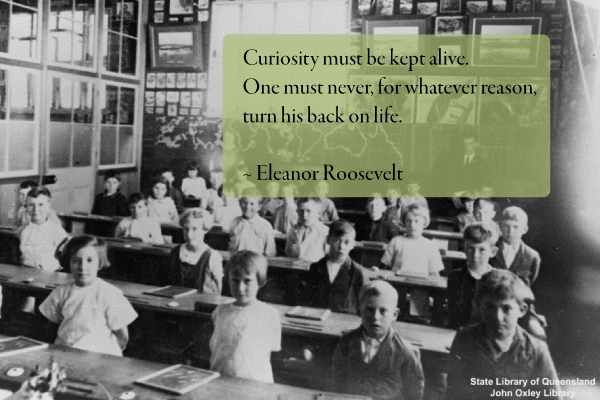
14 Ways lesson 2 image, Children inside a classroom at the Rosewood State School. Courtesy of State Library of Queensland, with Eleanor Roosevelt quote, "Curiosity must be kept alive. One must never, for whatever reason, turn his back on life."
Children inside a classroom at the Rosewood State School. Courtesy of State Library of Queensland

[show_to accesslevel=’free’ duration=’14’]


The full lesson will become available 14 days after course registration.

In the meantime, check out the Linkedin groups:

CRE Preparation – a great place to ask a question related to the ASQ CRE Body of Knowledge

ASQ Reliability Division – a place for general or specific reliability related questions.

And search on Linkedin, Google+, Facebook, and Twitter for reliability, then join the conversation. Ask some questions and answer a few, too. You get more than you put into these discussions.

[/show_to][hide_from visible_to=’public’]Please login with your site registration to view the lesson.

[login_form redirect=”https://fred-schenkelberg-project.prev01.rmkr.net/14-ways-acquire-reliability-engineering-knowledge/14warek-2/“]

If you haven’t registered, it’s free and takes only a moment.
[/hide_from][show_to accesslevel=’free’ delay=’14’ noaccess=’This lesson is available a week after the previous lesson.’]

There is no reason for the wonder of curiosity to stop. If you have a question, ask. Most likely, someone knows the answer or may provide a way to find an answer. For reliability engineers we often work alone (i.e., with no other reliability professionals on the team). Today there are forums, groups, email lists, and your list of professional contacts that are all available for a question.

You are not alone: Find the group or list of your choice and ask. It may help others to learn, too. Ask good questions.

Asking a Good Question

Be specific. Instead of asking, “What is the best accelerated test?” ask a specific question based on what you already know, such as, “Given a ball grid array solder joint fatigue failure mechanism, what is the best way to design and conduct an accelerated life test?” Be sure to define what you mean by “ best,” which could mean least expensive, quickest to get to results, most accurate, or something else in your situation.

Do not place unwarranted requirements on the request. You are requesting advice or information and rely on good will for responses. In open forums you should not expect others to do the work for you. Do your research first.

Network to Know Who to Ask

Build your network and help others solve problems. This helps to build and strengthen your network. You can ask and answer questions of your peers at technical conferences, on webinars or technical forums, or directly.

Technical conferences have paper presentations and tutorials that provide insights on how your peers approach and solve reliability problems. Furthermore, you can discuss issues, build your network, and practice asking questions. For information on reliability-related conferences (and many other events and courses) see the Reliability Calendar page.

Webinars tend to use lectures with the option to type in questions that generally receive attention. Some events encourage sending in questions before the event. See the Upcoming Reliability Webinars page.

Forums are market- and/or topic-specific discussion groups and exist on LinkedIn Groups, Yahoo Groups, Google + Communities, and trade journal or consultant websites.

An email to a colleague is direct. Unlike a group or forum an email goes to just those you address so you may have to consider whether the recipient would know the answer to your question.

A phone call or personal meeting is very direct and best for complex questions that may require a discussion.

With practice you can ask and learn a great deal about reliability engineering. Be sure to help others by answering questions, too.


Next Week: Desire

This is part setting a goal then setting out a way to achieve the goal. It’s the motivation that helps you invest in learning.

In the meantime, check out the Linkedin groups:

CRE Preparation – a great place to ask a question related to the ASQ CRE Body of Knowledge

ASQ Reliability Division – a place for general or specific reliability related questions.

And search on Linkedin, Google+, Facebook, and Twitter for reliability, then join the conversation. Ask some questions and answer a few, too. You get more than you put into these discussions.


[/show_to]

Save time and money as you master reliability engineering.

by Fred Schenkelberg

Practice

Sorry, but you don't have access to this content until Thursday, 1st January, 1970

by Fred Schenkelberg

captivate test

A title

abstract

links for further reading


by Fred Schenkelberg

Introduction

14 Ways to Acquire

Reliability Engineering Knowledge

Accendo_Courses_250x250Maria Popova recently wrote about the work of James T. Mangan and his book You Can Do Anything!

, published in 1936. In particular, she focused on one section entitled “14 Ways to Acquire Knowledge.” The article is about learning anything, which led me to thinking about how to learn reliability engineering.

So, without apology, let us explore 14 ways to learn about reliability engineering.

[hide_from visible_to=’public’]

Please login to view the lesson.

[login_form redirect=”https://fred-schenkelberg-project.prev01.rmkr.net/14-ways-acquire-reliability-engineering-knowledge/”]

If you haven’t registered, it’s free and takes only a moment.
[/hide_from][show_to accesslevel=’14warek’  noaccess=’This lesson is available after course registration.’]


We start learning at an early age, receive formal education, follow our interests, and continue to adapt to our world our entire life. These days we have many ways to learn—yet nothing is really that different than when Mangan wrote the section on how to learn anything.

The Internet does provide additional ways to find and consume information, yet it is really only variations of the list Mangan created.

Paths to Learn

The 14 ways to learn are rarely used in isolation. To teach a subject you may first read a book on the topic, then ask an expert for clarification on a few points, then do some experiments or practices a bit, before writing on the topic. Then you prepare and teach the subject.

There are many ways to learn and many combinations of ways to learn. Depending on the topic, current ability or knowledge, or resources and opportunities available you may take very different paths to learning.

Another example may be learning a hobby, for example woodworking. Based on fond memories of my grandfather’s woodworking shop (especially the smell of saw dust and cigars), I knew that I would learn woodworking at some point.

Later, while serving in the army and stationed at Fort Hood, Texas, I had time to explore the various craft shops. With time and equipment available, I decided to start learning woodworking. The desire to learn came from childhood memories and the intent to make something with my own hands.

After the safety briefings I was directed to a small library of books on the craft of woodworking. Reading about the subject helps you learn the language and provide a context for the overall process. Next, I followed the weekly public television show The New Yankee Workshop that let me observe a master of the craft.

Starting with simple projects, I quickly became involved in a series of experiments, learning what works and what does not work with specific techniques and tools. Then, practice, practice, and more practice were needed to master the techniques and tools.

At times, I learned by just asking for feedback from other experienced woodworkers on my ability and suggestions for improvement. I am still learning and enjoying the craft of woodworking today.

Plenty to Learn

Within reliability engineering there are plenty of topics to learn. Today I continue to learn about new products, new materials, and new markets where each requires a different application of the basic reliability tools. If you’re new to reliability you may need to master reliability statistics, process control techniques, and change management, all of which will help improve your ability to influence your team and organization.

If starting a new team with a charter to improve your organization’s reliability program, you may need to learn how to lead, how to inspire others, the elements of an overall reliability program, how to connect reliability activities to business and customer objectives, etc. Moreover, we all need to learn better ways to cost effectively achieve results.

This course introduces each of the 14 ways to learn reliability engineering, including how to get started, resources, and additional support for your efforts to learn reliability engineering.


Next Week: Practice

Practice make perfect when done deliberately. It’s not just 10,000 hours of practice to become an expert, it’s having meaningful feedback that matters.

In the meantime, check out the rest of the Accendo Reliability site. Tech Shorts, ebooks, Dare to Know interviews, and more on the way. Let me know what you would like to learn more about and I’ll work to get it on the site or point you to existing resources.

Be sure to add fms@accendoreliability.com to your email’s whitelist so you continue to receive the lesson announcements.


*Accendo Reliability participates in the Amazon Services LLC Associates Program. This affiliate advertising program provides a way for sites to earn a commission on links to Amazon. In short, this means when you buy something on Amazon after following a link from this site, we get a small percentage of its price. This helps support Accendo Reliability by offsetting a portion of the cost to maintain the site. And, your support is much appreciated.

[/show_to]

Save time and money as you master reliability engineering.

  • « Previous Page
  • 1
  • …
  • 40
  • 41
  • 42
  • 43
  • Next Page »
[hide_from site_member="1" visible_to="public"] Get Weekly Email Updates
[/hide_from]
The Accendo Reliablity logo of a sun face in circuit

[hide_from visible_to='public']Please login to have full access.

[login-form]
[password-recovery-link text='Lost Password? Click here to have it emailed to you.']

Not already a member? It's free and takes only a moment to create an account with your email only.

Join

Your membership brings you all these free resources:

  • Live, monthly reliability webinars & recordings
  • eBooks: Finding Value and Reliability Maturity
  • How To articles & insights
  • Podcasts & additional information within podcast show notes
  • Podcast suggestion box to send us a question or topic for a future episode
  • Course (some with a fee)
  • Largest reliability events calendar
  • Course on a range of topics - coming soon
  • Master reliability classes - coming soon
  • Basic tutorial articles - coming soon
  • With more in the works just for members

[/hide_from][show_to accesslevel="Free" ]
Thanks for being a member [member_first_name]!
[/show_to]

© 2026 FMS Reliability · Privacy Policy · Terms of Service · Cookies Policy

Book the Course with John
  Ask a question or send along a comment. Please login to view and use the contact form.
This site uses cookies to give you a better experience, analyze site traffic, and gain insight to products or offers that may interest you. By continuing, you consent to the use of cookies. Learn how we use cookies, how they work, and how to set your browser preferences by reading our Cookies Policy.