
Accendo Reliability

Your Reliability Engineering Professional Development Site

  • Home
  • About
    • Contributors
    • About Us
    • Colophon
    • Survey
  • Reliability.fm
    • Speaking Of Reliability
    • Rooted in Reliability: The Plant Performance Podcast
    • Quality during Design
    • CMMSradio
    • Way of the Quality Warrior
    • Critical Talks
    • Asset Performance
    • Dare to Know
    • Maintenance Disrupted
    • Metal Conversations
    • The Leadership Connection
    • Practical Reliability Podcast
    • Reliability Hero
    • Reliability Matters
    • Reliability it Matters
    • Maintenance Mavericks Podcast
    • Women in Maintenance
    • Accendo Reliability Webinar Series
  • Articles
    • CRE Preparation Notes
    • NoMTBF
    • on Leadership & Career
      • Advanced Engineering Culture
      • ASQR&R
      • Engineering Leadership
      • Managing in the 2000s
      • Product Development and Process Improvement
    • on Maintenance Reliability
      • Aasan Asset Management
      • AI & Predictive Maintenance
      • Asset Management in the Mining Industry
      • CMMS and Maintenance Management
      • CMMS and Reliability
      • Conscious Asset
      • EAM & CMMS
      • Everyday RCM
      • History of Maintenance Management
      • Life Cycle Asset Management
      • Maintenance and Reliability
      • Maintenance Management
      • Plant Maintenance
      • Process Plant Reliability Engineering
      • RCM Blitz®
      • ReliabilityXperience
      • Rob’s Reliability Project
      • The Intelligent Transformer Blog
      • The People Side of Maintenance
      • The Reliability Mindset
    • on Product Reliability
      • Accelerated Reliability
      • Achieving the Benefits of Reliability
      • Apex Ridge
      • Breaking Bad for Reliability
      • Field Reliability Data Analysis
      • Metals Engineering and Product Reliability
      • Musings on Reliability and Maintenance Topics
      • Product Validation
      • Reliability by Design
      • Reliability Competence
      • Reliability Engineering Insights
      • Reliability in Emerging Technology
      • Reliability Knowledge
    • on Risk & Safety
      • CERM® Risk Insights
      • Equipment Risk and Reliability in Downhole Applications
      • Operational Risk Process Safety
    • on Systems Thinking
      • The RCA
      • Communicating with FINESSE
    • on Tools & Techniques
      • Big Data & Analytics
      • Experimental Design for NPD
      • Innovative Thinking in Reliability and Durability
      • Inside and Beyond HALT
      • Inside FMEA
      • Institute of Quality & Reliability
      • Integral Concepts
      • Learning from Failures
      • Progress in Field Reliability?
      • R for Engineering
      • Reliability Engineering Using Python
      • Reliability Reflections
      • Statistical Methods for Failure-Time Data
      • Testing 1 2 3
      • The Hardware Product Develoment Lifecycle
      • The Manufacturing Academy
  • eBooks
  • Resources
    • Special Offers
    • Accendo Authors
    • FMEA Resources
    • Glossary
    • Feed Forward Publications
    • Openings
    • Books
    • Webinar Sources
    • Journals
    • Higher Education
    • Podcasts
  • Courses
    • Your Courses
    • 14 Ways to Acquire Reliability Engineering Knowledge
    • Live Courses
      • Introduction to Reliability Engineering & Accelerated Testings Course Landing Page
      • Advanced Accelerated Testing Course Landing Page
    • Integral Concepts Courses
      • Reliability Analysis Methods Course Landing Page
      • Applied Reliability Analysis Course Landing Page
      • Statistics, Hypothesis Testing, & Regression Modeling Course Landing Page
      • Measurement System Assessment Course Landing Page
      • SPC & Process Capability Course Landing Page
      • Design of Experiments Course Landing Page
    • The Manufacturing Academy Courses
      • An Introduction to Reliability Engineering
      • Reliability Engineering Statistics
      • An Introduction to Quality Engineering
      • Quality Engineering Statistics
      • FMEA in Practice
      • Process Capability Analysis course
      • Root Cause Analysis and the 8D Corrective Action Process course
      • Return on Investment online course
    • Industrial Metallurgist Courses
    • FMEA courses Powered by The Luminous Group
      • FMEA Introduction
      • AIAG & VDA FMEA Methodology
    • Barringer Process Reliability Introduction
      • Barringer Process Reliability Introduction Course Landing Page
    • Fault Tree Analysis (FTA)
    • Foundations of RCM online course
    • Reliability Engineering for Heavy Industry
    • How to be an Online Student
    • Quondam Courses
  • Webinars
    • Upcoming Live Events
    • Accendo Reliability Webinar Series
  • Calendar
    • Call for Papers Listing
    • Upcoming Webinars
    • Webinar Calendar
  • Login
    • Member Home
Home » Articles » Why Reliability Engineers Should Embrace Monte Carlo Analysis

by JD Solomon Leave a Comment

Why Reliability Engineers Should Embrace Monte Carlo Analysis

Why Reliability Engineers Should Embrace Monte Carlo Analysis

Monte Carlo analysis, or Monte Carlo simulation, is a technique for forecasting that accounts for uncertainty and variability. As an analytical tool, Monte Carlo analysis forces the project development process to incorporate wider thinking and minimize biases. As a communication tool, Monte Carlo analysis is powerful in showing the probabilities and possibilities and identifying the input parameters that impact a specific project context.

Monte Carlo analysis is now more convenient and affordable than at any point in its 70-year history. The technique provides huge additive value for large and complex projects and capital-intensive programs.

Caveats

Out of the gate, let me say that I love Monte Carlo analysis. I have used the approach for over thirty years. I have degrees in engineering and finance. I built an asset management practice that used MCA as a core technique and even did a keynote address at an international user conference on how to do it.

Some of those reasons include that Monte Carlo analysis is often poorly communicated and the technique misses the rare events that are the source of catastrophic project results.

Reliability Engineers Thinking In Ranges

According to Gustavo Vinueza, you may be in the ballpark with high, medium, and low estimates of input parameters. However, forecasts based on a single-point estimate for each parameter are science fiction. Simply, Monte Carlo analysis allows you to explore uncertainty. It forces you to start thinking in ranges.

What is Monte Carlo Analysis

Monte Carlo Analysis is a computer-based method of analysis developed in the 1940s that uses statistical sampling techniques to obtain a probabilistic approximation to the solution of a mathematical equation or model. This 1997 definition from the United States Environmental Protection Agency is painfully simple, but a few key insights can be gained from it.

Uncertainty and Variability

Monte Carlo simulation uses thousands or millions of permutations of random variables to calculate all possible outcomes. The probability distribution it generates makes it an effective tool in forecasting uncertainties and variability experienced in many project management applications.

There is a fine difference between uncertainty and variability. Uncertainty is quantified by a probability distribution related to the likelihood of an uncertain quantity’s single, true value. Variability is quantified by a distribution of frequencies derived from observed data of multiple instances of the quantity.

Strengths According to ISO 31010

ISO 31010 is the supporting standard for the international risk standard (ISO 31000) and provides guidance on the selection and application of systematic techniques for risk assessment. Five of Monte Carlo analysis strengths include the following:

  1. the method can accommodate any distribution in an input variable, including empirical distributions derived from observations of related systems
  2. models are relatively simple to develop and can be extended as the need arises
  3. sensitivity analysis can be applied to identify strong and weak influences
  4. models can be easily understood as the relationship between inputs and outputs is transparent
  5. software is readily available and relatively inexpensive

Questions to Ask Before Performing a Monte Carlo Analysis

Questions to consider at the initiation of a quantitative variability and uncertainty analysis, such as Monte Carlo analysis, include:

  • Will the quantitative analysis of uncertainty and variability improve the assessment?
  • What are the major sources of variability and uncertainty? How will variability and uncertainty be kept separate in the analysis?
  • Are there time and resources to complete the analysis?
  • Does the project warrant this level of effort?
  • Will a quantitative estimate of uncertainty improve the decision? (How could the decision change?)
  • What types of skills and experience are needed to perform the analysis?
  • Have the weaknesses and strengths of the methods been evaluated?
  • How will the variability and uncertainty analysis be communicated to the public and decision makers?

The Greatest Value: Insights

The most important aspect of a quantitative variability and uncertainty analysis is the interaction between the analysts, decision makers, and other interested parties, which makes risk assessment a dynamic rather than a static process.

Uncertainty Requires Effective Communication

One of the most important challenges is effectively communicating the sources of variability and uncertainty and their impacts. Higher levels of complexity and uncertainty typically make Monte Carlo analysis more attractive, as it facilitates communication.
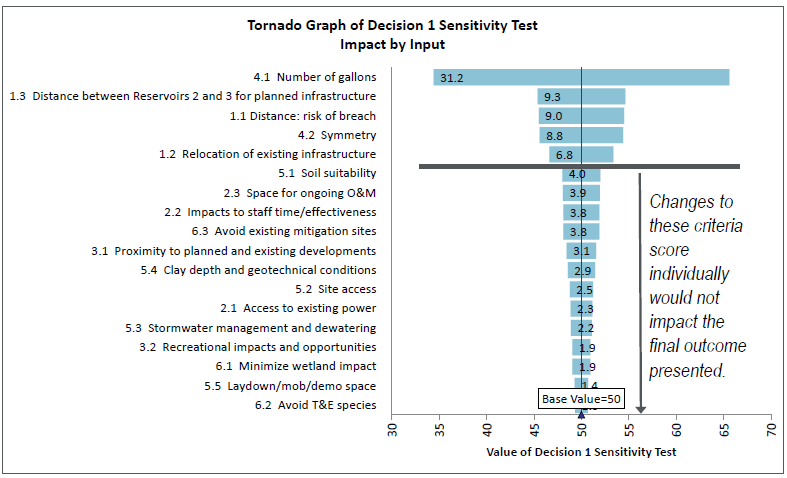
Tornado diagrams are effective for showing Monte Carlo sensitivity analysis and the impact of key inputs on project performance.
Tornado diagrams are effective for showing Monte Carlo sensitivity analysis and the impact of key inputs on performance.

Ironically, insights gained from a quantitative analysis are generally qualitative in their expression and understanding. Insights can include an understanding of the following:

  • the degree of variability and uncertainty and the confidence that can be placed in the analysis and its findings related to the project budget, schedule, and quality.
  • the key sources of project delivery variability and uncertainty and their range of impacts
  • the critical assumptions and their importance to project agreements and risk management
  • the unimportant assumptions and why they are unimportant
  • the extent to which plausible alternative assumptions or risk and uncertainty mitigation could affect the project
  • the key project development controversies and a sense of what difference they might make individually and collectively

Implementing Monte Carlo Analysis with FINESSE

Monte Carlo analysis or Monte Carlo simulation is a technique used for forecasting that considers uncertainty and variability. As an analytical tool, Monte Carlo analysis forces the project development process to incorporate wider thinking and minimize biases. As a communication tool, Monte Carlo analysis is powerful in showing the probabilities and possibilities and identifying the input parameters that impact a specific project context.

Monte Carlo analysis is now more convenient and affordable than at any point in its 70-year history. The technique provides significant added value for large, complex projects and capital-intensive programs. For routine projects with low complexity and uncertainty, an incremental approach, in which Monte Carlo analysis is conducted after traditional high-, medium-, and low-level analyses, is most practical.
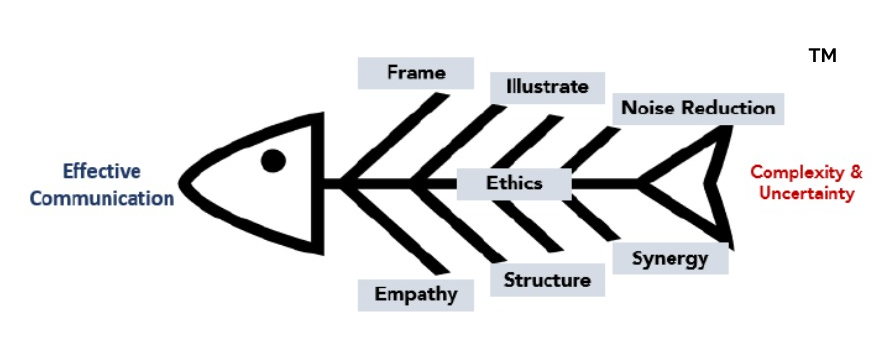
The trademarked FINESSE fishbone diagram is a proven tool for effective communication in the presence of high levels of complexity and uncertainty.
The trademarked FINESSE Fishbone Diagram is a proven tool for effective communication in complex, uncertain environments.

FINESSE provides a proven cause-and-effect approach to effective communication in high-complexity, high-uncertainty contexts. Communicating the results of Monte Carlo analysis is well-suited to the FINESSE approach.


See also: Solomon, J. D. (2023, March 15). Why embrace Monte Carlo analysis for new project development. JD Solomon Solutions. https://www.jdsolomonsolutions.com/post/why-embrace-monte-carlo-analysis-for-new-project-development


The elements of the FINESSE fishbone diagram® are Frame, Illustrate, Noise reduction, Empathy, Structure, Synergy, and Ethics.


Need help getting started? JD Solomon Inc. provides practical solutions for Monte Carlo Analysis for reliability programs.


Filed Under: Articles, Communicating with FINESSE, on Systems Thinking Tagged With: FINESSE fishbone diagram, Monte Carlo Analysis, Reliability techniques, risk, Uncertainty

About JD Solomon

JD Solomon, PE, CRE, CMRP provides facilitation, business case evaluation, root cause analysis, and risk management. His roles as a senior leader in two Fortune 500 companies, as a town manager, and as chairman of a state regulatory board provide him with a first-hand perspective of how senior decision-makers think. His technical expertise in systems engineering and risk & uncertainty analysis using Monte Carlo simulation provides him practical perspectives on the strengths and limitations of advanced technical approaches.  In practice, JD works with front-line staff and executive leaders to create workable solutions for facilities, infrastructure, and business processes.

« MTBF Search Result Sadness

Leave a Reply Cancel reply

Your email address will not be published. Required fields are marked *

Headshot of JD SolomonArticles by JD Solomon
in the Communicating with FINESSE article series
[show_to accesslevel="Free" ] Thanks for being a member [member_first_name]! [/show_to][hide_from visible_to='public']

Join Accendo

Receive information and updates about articles and many other resources offered by Accendo Reliability by becoming a member. It’s free and only takes a minute.

Join Today

[/hide_from]

Recent Posts

  • Why Reliability Engineers Should Embrace Monte Carlo Analysis
  • MTBF Search Result Sadness
  • Test Failure During Validation – Is it Disaster or Blessing?
  • How to Create a Positive Risk Culture
  • Developing a Planned Maintenance Strategy based on Criticality

© 2026 FMS Reliability · Privacy Policy · Terms of Service · Cookies Policy

Book the Course with John
  Ask a question or send along a comment. Please login to view and use the contact form.
This site uses cookies to give you a better experience, analyze site traffic, and gain insight to products or offers that may interest you. By continuing, you consent to the use of cookies. Learn how we use cookies, how they work, and how to set your browser preferences by reading our Cookies Policy.