
Understanding the different types of data and thier respective uses is critical for product delveopment testing and analysis.
Each type of eo f data plays a a role in ensuring that products meet quality standards and fulfill user needs.
[Read more…]Your Reliability Engineering Professional Development Site
Find all articles across all article series listed in reverse chronological order.
Understanding the different types of data and thier respective uses is critical for product delveopment testing and analysis.
Each type of eo f data plays a a role in ensuring that products meet quality standards and fulfill user needs.
[Read more…]
The urge to ask questions can sometimes feel redundant, especially when you already have the answers. When you’re on the verge of holding back a question you already know the answer to, pause and consider your motives. As a facilitator, what impact are you aiming for? Are you looking to guide the group toward understanding, or are you merely asserting dominance with your knowledge? Assessing the significance of arriving at a predetermined answer versus fostering an environment of collaboration and openness is essential.
[Read more…]
MTBF use and thinking is still rampant. It affects how our peers and colleagues approach solving problems.
There is a full range of problems that come from using MTBF, yet how do you spot the signs of MTBF thinking even when MTBF is not mentioned? Let’s explore the approaches that you can use to ferret out MTBF thinking and move your organization toward making informed decisions concerning reliability. [Read more…]

The Government Accounting Standards Board (GASB) on June 20, 2022, issued an exposure draft on the disclosure of certain risks. This piece examines the requirements and problems.
[Read more…]
Learn what you need to know and do to quickly have world class maintenance and reliability excellence in your operation
In 2002 I wrote a small book after visiting Sumitomo Chemicals in Japan called the Japanese Path to Maintenance and Reliability Excellence. It explained the maintenance and reliability philosophy and attitudes that got Sumitomo Chemicals amazingly high chemical process plant uptime.
[Read more…]
Saving 20% of your maintenance costs is achievable in many operations. Are you running your production equipment to failure? Is your maintenance spending consistently higher than you budget allows? Are you frustrated that breakdowns cause delays in delivery schedules? If you answer “yes” to any of those questions, then savings and production gains are possible. The 20% figure is arbitrary but truly indicative of what is possible. Reliable production equipment is far cheaper to maintain simply because it is reliable, but it must be maintained. It requires the right maintenance being done the right way, and at the right times. Get that right and you save operating costs, AND you gain productive uptime with its attendant revenue.
[Read more…]
Join Nancy Regan in the serene setting of Ave Maria Grotto in Cullman, Alabama, as she demystifies one of the biggest Reliability Centered Maintenance (RCM) analysis misconceptions – the necessity of applying RCM to all assets. In this enlightening video, Nancy draws parallels between the selective craftsmanship of Brother Joseph Zoettl — who created 125 meticulous replicas of the world’s most significant structures — and the strategic approach required for effective RCM. What You’ll Learn:
[Read more…]
Dear friends, Our best wishes to all for a great Quality Month and Year Ahead for your Quality Initiatives! In this Quality Month, we are starting a new series of videos on Hypothesis Testing in our Channel! we are happy to release our first video on Hypothesis Testing! We will be releasing a complete series of videos on Hypothesis Tests! In this first video on the subject, Hemant Urdhwareshe explains the basic concepts and discusses an illustration of One-Sample Z-Test!
[Read more…]
Data-driven decision-making is central to designing and improving products and processes. Professionals are often presented with statistical analyses, with key outputs such as p-values or confidence intervals that indicate whether results are “statistically significant.” However, statistical significance doesn’t always translate into meaningful changes on the shop floor or within a product’s design. Understanding the difference between statistical significance and practical significance is crucial to making well-informed decisions that genuinely impact the business.
[Read more…]
A recorded webinar on how to educate your leadership team on the value of asset management.
[Read more…]A Root Cause Analysis (RCA) is a structured approach to identifying the underlying factors that result in the unwanted/unexpected outcomes of chronic or sporadic events. It is a highly methodic and rigorous process. And highlights what assets, systems or behaviors need to be modified in order to to limit or eliminate the recurrence of similar outcomes. The fundamental driver is to address, correct or mitigate the root causes that lead to the unwanted event rather than addressing the symptoms. Bob Latino, a renowned RCA expert, summarizes this concept as “the establishing of logically complete, evidence based, tightly coupled chains of factors from the least acceptable consequences to the deepest significant underlying causes.”
[Read more…]
Over 20 years ago the Assistant Secretary of the Army directed the Army to not use MIL HBK 217 in a request for proposals, even for guidance. Exceptions, by waiver only.
217 is still around and routinely called out. That is a lot of waivers.
Why is 217 and other parts count database prediction packages still in use? Let’s explore the memo a bit more, plus ponder what is maintaining the popularity of 217 and ilk.
[Read more…]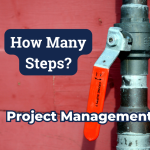
Project managers are challenged by creating, implementing, and maintaining workflows, Standard Operating Procedures (SOPs), and standard instructions. The same applies to maintenance and reliability professionals who develop preventative maintenance (PMs) and job plans. Knowing the difference between each type is the first step. Then, the number of steps in each of these often depends on the audience’s experience, the task’s complexity, and preference. It’s most important for project managers to find the sweet spot.
[Read more…]
Accelerated Life Testing (ALT) on subcomponents and durability testing for whole products are two strategies used to assess the reliability of products. ALT involves subjecting a product to conditions beyond its normal service parameters to uncover faults and potential failure modes in a short time, allowing engineers to make predictions about its service life and maintenance intervals. On the other hand, durability testing for whole products involves testing the entire product under normal operating conditions to assess its long-term reliability and performance.
[Read more…]
Stability studies are used to understand and model the degradation of key product characteristics over time. They are often used to determine the product’s shelf life (the length of time a product may be stored without becoming unfit for use or consumption).
Shelf-Life studies should identify the potential “failure modes” and how they will assessed/ measured. Examples of characteristics that are measured often include appearance attributes, texture, taste, microbial counts, and product effectiveness/performance.
[Read more…]