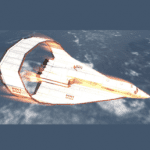
A helpful analogy in communicating the concept of statistical reliability confidence is the “new airplane” example. Let’s say I am developing an entirely new technology for airplanes. The airplane has an engine that has never been used before for air travel; a fusion engine. I tell the world that this new airplane with a fusion engine will have a reliability of 99.99999999%, the highest any airplane has ever had. It’s not possible to fully demonstrate this reliability until every single unit of this airplane has been produced, used to full life, and the full fleet is retired. As long as one is still flying it can add or subtract from the reported reliability number. So, how do we make decisions at product launch regarding the design’s reliability? No products have yet to be produced or used by customers, so how can we trust the design?