Are you living in Reactive Mode? Gain independence from your equipment by optimizing maintenance tasks so you can get the Reliability you need from your equipment. [Read more…]
Your Reliability Engineering Professional Development Site
Find all articles across all article series listed in reverse chronological order.
by Nancy Regan Leave a Comment

Are you living in Reactive Mode? Gain independence from your equipment by optimizing maintenance tasks so you can get the Reliability you need from your equipment. [Read more…]
by Fred Schenkelberg 1 Comment

At an early concept meeting discussing the technical strategy for the new product, the engineering teams were at an impasse. The decision matrix balanced out with three distinct options. Product reliability differed slightly with each option yet presented risks just as the considerations of cost, complexity, feature set, and time to market.
The project manager, the leader of the development program, asked a few questions, asked for input from the director of engineering, and selected a path forward.
The team accepted the decision. The project went well. Yet, I’ve often wondered how did she know which option to select. I also learned to trust her judgment on difficult decisions. [Read more…]
by Robert (Bob) J. Latino Leave a Comment

In times that promise to be a financial challenge for many corporations, we must make decisions as to where to invest our scarce dollars and where to cut from our current operations. When faced with these decisions, we must be realistic and pragmatic about how short-term decisions impact our long-term goals. Yes, when times are hard, how well positioned will we be when the economy picks up (and keep the faith, it will pick up)? [Read more…]

Frac plugs create a seal with the inner diameter of the casing. With the frac ball on seat in the frac plug, a check valve is formed in the casing which resists fracturing pressures up to 15,000 psi. Composite frac plugs use substantially composite components and rubber seals. Degradable frac plugs use components manufactured from magnesium (Mg) alloys. [Read more…]
by Christopher Jackson Leave a Comment

A common refrain from managers and engineers alike (as it relates to making or maintaining reliable products) is:
How do we know if we are there yet?
This makes reliability engineering sound like driving a car, sanding a piece of wood, mowing the lawn, or any other endeavour where efforts perfectly align with progress.
This doesn’t work for reliability. Reliability can be easy to achieve, but it needs to be thought about in a different way. And when you do, everything becomes easier. [Read more…]
by James Kovacevic Leave a Comment
Performing a PM Optimization is not always as simple as it sounds. Often a Maintenance Planner will assemble a team of technicians to ask what is value-added and what is missing from a PM Routine. While these may be good questions to ask before diving into an analysis, or after an analysis, it does not base the answers on data. Basing the PM Routine on data, not intuition is critical to the long-term success of any organization.
To perform a PM Optimization, there are three main types of analysis to focus on the effectiveness of any PM Routine. The specific analysis used will depend on how mature (or effective) the current PM Routine is, and on the specific type of failures that the PM Routine is trying to address.
by Greg Hutchins Leave a Comment

The Central Artery/Tunnel Project, known as the Big Dig in Boston, originally was planned to take 10 years to complete for a budget of $2.5B. It actually took 30 years and cost $14.8 B. The traditional project framework used was inadequate for a long duration project. A new project framework, I call Adaptive Rolling Wave, is needed. It is a combination of the Adaptive Project and Rolling Wave framework, that is more suited for a long duration project because it breaks down the project into a number of smaller projects. [Read more…]
by Nancy Regan Leave a Comment

A visit to Quincy Market in Boston clears up a big misconception about RCM. It isn’t feasible to do RCM on all your equipment. Here’s why… [Read more…]
by Bryan Christiansen 1 Comment
Setting up industrial operations is part of the capital expenditure a business has to undertake. Businesses now analyze the lifetime cost of any capital expenditure before making a decision. This includes the inventory cost, labor expenses, maintenance costs, cost incurred due to expected downtime, and expenses for upgrades. This tilts the decision in favor of options that provide long-term machine reliability and reduced maintenance.
by Christopher Jackson Leave a Comment

I often talk to engineers who have just been told that they are now a ‘reliability guy or girl’ for their organization. The CEO or perhaps a director decides that reliability is now important, so a group of poor unfortunates are hastily and collectively anointed as ‘the’ reliability program. Is this familiar?
Sometimes this works. Sometimes these rebranded ‘reliability guys and girls’ create amazing programs that [Read more…]
by Robert (Bob) J. Latino Leave a Comment

Does this paradigm apply at your workplace?:
“We NEVER seem to have the time and budget to do things right, but we ALWAYS seem to have the time and budget to do them again!”
While this article was written for manufacturing many years ago, is it any less applicable today, in any industry?
by James Kovacevic Leave a Comment
In the petroleum, natural gas and petrochemical industries, great attention is being paid to safety, reliability, and maintainability of equipment. This is true in any industry and as such the learnings and information found within ISO 14224 can be applied to any industry. [Read more…]
by James Reyes-Picknell Leave a Comment

In 2014, at an IMEC conference organized by the University of Toronto, Art Rice of Maintenance Technology Magazine said that in many cases “Lean is a form of Anorexia”. He was right then, and he is still right today.
When I heard him, I realized that in many cases where I’ve seen attempts at “lean manufacturing” the lean really means “understaffed”. In those cases some of the lean manufacturing tools have been implemented, often with the help of outside expert help but lean results haven’t occurred. The introduction of “lean” in those companies was yet another attempt to cut costs without any deep thought as to what caused the high costs before introducing “lean”. [Read more…]
by Greg Hutchins Leave a Comment

Working From Home (WFH)…just one of the things that the “New Normal” will bring according to a few voices from the populations of various workforces who have contributed to economies during lockdowns. People seem to have enjoyed the utopia of ‘flexible’ working hours with a freedom to work when they want, attending virtual meetings and collaborating in on-line virtual offices. [Read more…]
by Ray Harkins Leave a Comment

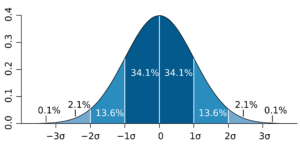
One of the most common questions I get from students in my Process Capability Class is, how can I use the capability index from my process to approximate a defect level for my process? [Read more…]
Ask a question or send along a comment.
Please login to view and use the contact form.