
It’s important to make sure you do the right Proactive Maintenance at the right intervals because you can catch things before they become serious failures. How a trip to the vet put it all in perspective for me… [Read more…]
Your Reliability Engineering Professional Development Site
Find all articles across all article series listed in reverse chronological order.
It’s important to make sure you do the right Proactive Maintenance at the right intervals because you can catch things before they become serious failures. How a trip to the vet put it all in perspective for me… [Read more…]
Meaning of Identifiers
K&R
HALT (Highly Accelerated Life Test). There is an opinion that “its name doesn’t do it justice”.
In the first Part “Is the HALT a Life Test or not?” we added the test time to the HALT stress set. We see there is the Life in HALT.
In Part 2 we added knowledge of the lifetime distribution type and a shape parameter (variation). We were able to evaluate the reliability during the warranty time with a given CL by “pulling the lifetime distribution by the tail”. We see HALT may be a quantitative Test. [Read more…]
Nicholas W. Eyrich, Robert E. Quinn, and David P. Fessell published in the Harvard Business Review an article titled “How One Person Can Change the Conscience of an Organization”, dated December 27, 2019. In the article, they discuss how corporate transformations, while assumed to occur from the top-down, actually it is the middle managers and first-line supervisor that can make significant change happen.
They look at what it takes for one person to make a significant change within an organization. As reliability or quality professionals, we often have the opportunity to spot needed changes. It is then up to us to tackle those challenges to make the change happen. [Read more…]
“Number rules the universe.” – Pythagoras
Risk Priority Number (RPN) . . . by definition, a single number that represents relative risk for prioritizing issues in an FMEA. Sounds simple. But, how well does it work in practice? And, is there a better way?
This article highlights shortcomings and concerns when using RPN in FMEA, and discusses an alternative. It is a companion article to “Prioritizing risk for corrective actions in an FMEA.”
Ballistic setting tools (wireline setting tools) have been used for over sixty years to convey downhole packer devices, including frac plugs, into oil and gas wells. The principle of operation is simple: at setting depth, current sent down the electric line ignites the on-board power charge, which burns and liberates high-pressure gas, which displaces a piston over a fixed distance. This creates the mechanical force used for “setting” the frac plug in casing. [Read more…]

Well, we are going COTS, so there is no point creating (or demanding) reliability specifications for it.
Really?
I was just speaking to a couple of engineers – from different organizations – who were coincidentally struggling with the reliability of Commercial Off The Shelf (COTS) systems. COTS is a funny term. Big contractors, governmental organizations and militaries use the term ‘COTS’ a lot. But they tend to be the only ones who do. [Read more…]

Foreword By Robert J. Latino: I wanted to dust off this impactful paper written by my father before he passed, and ask for your opinions about how far we have really come in the field of Reliability Engineering, based on your experience?
You are the ones that carry on the Reliability torch today. Based on Charles’ reflections about his Reliability career, how far has your facility come and what hurdles do you still face? [Read more…]
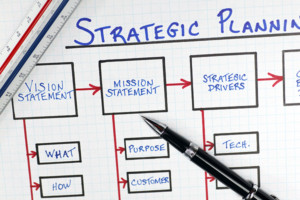
Many organizations often struggle to move plans forward. This may be due to the decision-making process and the people involved in the process. Often times the various decision makers are scattered across the company and may be distracted by issues in the plant. In other circumstances, the organization may know what the end goal is, but may not be aware of how to get there. [Read more…]
Contributed by: David A DeCastro (Salvador, Brazil).
In traveling the world in search of excellence in MRO Materials Management (indirect materials / spare parts), I noticed two curious facts. First, even in developed countries, both the industrial companies and providers of ERPs (enterprise management systems) are often technologically quite backwards outside the realm of their product specialization. Secondly, those typically smaller companies or subject matter experts who have developed differentiated technology, tend to keep it as a safe and guarded trade secret, failing to commercialize their brilliance. [Read more…]

The COVID-19 pandemic has changed the world. Social distancing, face masks, confinement at home and other restrictions is the new norm. This will be the case at least for the foreseeable future as the economy re-opens. The long-term effects are yet to be determined. One change that is likely to emerge is to find a more efficient, less costly way to perform work with minimal workers to make up for lost revenue. [Read more…]

More often than we think, customers who aren’t even trying to Use Case 7 our products seem to end up doing so regardless. That’s fine, it happens. However, it also tends to result in $1 billion + lawsuits that could have easily been avoided.
The big question is, who do YOU blame? I mean you, the person reading this article. When your team discovers a field failure root cause to be user error do you either:
One of the first things to do when faced with a set of numbers is to plot them. A histogram is often the first choice, maybe a dot plot. Up your data plotting skills and let your data provide a bit more information by using a box plot. [Read more…]
In the first part “Is the HALT a Life Test or not?” we added the test time to the HALT stress set. What does this give us for lifetime evaluation when testing one or two samples? The correct answer is nothing. But if we add knowledge of the lifetime distribution type and a shape parameter (variation), then we can work with its tails [Read more…]

How a construction site reminded me that an effective Reliability Program starts with RCM. When something new is built, the construction crew starts with the foundation. The same thing goes for a Reliability program. [Read more…]
Why do our Generally Accepted Accounting Principles (GAAP) dictate that equipment is an asset and our employees are liabilities? Don’t our executives always tell us ‘our people are our greatest assets?’ How come our financials don’t support their assertion? [Read more…]
