George Williams, CEO of ReliabilityX, explains what an Asset Management System is. If you have any questions or comments please feel free to share them in the comments below. We would love to answer them.
[Read more…]Your Reliability Engineering Professional Development Site
Find all articles across all article series listed in reverse chronological order.
George Williams, CEO of ReliabilityX, explains what an Asset Management System is. If you have any questions or comments please feel free to share them in the comments below. We would love to answer them.
[Read more…]
Many statistical tests and procedures assume that data follows a normal (bell-shaped) distribution.

For example, all of the following statistical tests, statistics, or methods assume that data is normally distributed:

If you had to give a grade to your current Root Cause Analysis (RCA) initiative, what would it be? How would you come to that conclusion (grade)? The paradox many face with such initiatives is drawing the distinction between compliance and actual effectiveness. What would our RCA grade be based on? In this article we will focus on the key elements to quantifiably measure your RCA initiative, so the organization can focus on the elements of the initiative that are lacking.
[Read more…]
A friend I have been mentoring for quite some time now asked me recently if I had a set of personal expectations I hold myself to. As part of our conversation, I quickly came up with 4 or 5 things and then later on sat down to list out the expectations I try to live by.
I think my parents set the groundwork for what I would consider my list of personal expectations. My Mom and Dad had sound values and I think it’s those values that influence our expectations. With that said, here is my list;
 As an Enterprise Maintenance Planner, you manage the backlog, provide a maintenance schedule, liaise with Maintenance and Operations, maintain excellent knowledge of the facility and its equipment, and find ways to optimize productivity. Phew! That’s no small to-do list.
Every day, you’re working hard to:

“A thought, even a possibility, can shatter and transform us.” – Friedrich Wilhelm Nietzsche
One of my favorite FMEA facilitation techniques, and one that can significantly enhance meaningful participation from FMEA team members, is called “Asking Thought-starter Questions.”

Pay $3k now to keep out of trouble or more to get out of jail later. Your plant asset performance is down and you know it. It’s only a matter of time before there is an accident. You need to improve but funds are limited.
The expert consultants will want to begin with some sort of an assessment. They will identify problems and offer solutions, for a price (likely $50k or more). You can’t afford it. Some consultants might even be former employees. Ask yourself, “if they worked here before, then why didn’t she/he fix what was wrong when they were here?” Consider getting a different consultant but you will still struggle with a big inconvenient truth! [Read more…]

Punch lines, ad-libs, and instrumental solos, even a single note on a Tibetan singing bowl, all depend on one thing…timing. Project Communication is also about timing and, whilst many people speak and opine with impunity the timing of written communication and converting possibly wild words into black & white can often mean the difference between collaboration and cooperation or resistance and antagonism.
[Read more…]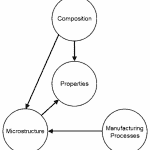
This article is the first in a series about material engineering and product reliability. The intent of the article is to provide you with a basic understanding of product reliability as viewed through the eyes of a material engineer. When I first talk to engineers who have a different background or focus, I start with the basics. As we speak more, I expand into relevant areas one at a time. That is what I hope to do with this series. Introduce you to some basics, and then move on to a deeper dive into the topic.
When considering product reliability, a materials engineer is concerned with how the materials in components respond when exposed to stressors that can cause the materials to degrade. Stressors include mechanical loads, corrosive environments, chemicals, heat and cold, electricity, and radiation. You may find additional stressors based on the environment components are used in, or how they are used. It’s a problem if a component or joint in a product degrades to the point where it stops functioning as required.

Isn’t it enough to estimate the age-specific field reliability functions for each of our products and their service parts? Of course we quantify uncertainties in estimates: sample uncertainties and population uncertainties due to changes or evolution. That’s information to forecast service requirements, recommend spares, optimize diagnostics, plan maintenance, warranty reserves, recalls, etc. What else could we possibly need or do?
[Read more…]
Interview with Terrence O’Hanlon and Maura Abad from Reliabilityweb. Discussion includes the changing landscape of reliability, digitilization, and how Reliabilityweb is adapting to serve their customers.
Most manufacturers would rate product quality as a key driver of their overall ability to satisfy customers and compete in a global market. Poor quality is simply not tolerated. It follows that manufacturers require objective measures of their product quality. While many companies still think of quality as “being in specification,” progressive companies focus on reducing variation to minimize waste and produce products that perform consistently well over time. Quality may be thought of as inversely proportional to variation–that is, as variation increases, product quality decreases. [Read more…]

Reliability engineers are responsible for keeping equipment or facilities operational, extending their useful lives, and managing maintenance costs by formulating relevant maintenance management policies and programs. They offer guidance to maintenance teams, analyze existing maintenance programs to identify opportunities for improvement. Unlike maintenance supervisors, these professionals rarely engage in the daily execution of maintenance tasks. The roles of reliability engineers span the entire lifecycle of an asset beginning from the design phase, operational stage to disposal. How do reliability engineers influence the gradual improvement of maintenance management in different organizations? [Read more…]
In this original post, A Mechanic’s Story: Basic Component Fatigue, we took a detailed journey through the physical side of a shaft failure RCA. We stopped at the physical side of that failure, parallel misalignment. However, stopping at the component level of failure does not constitute a credible and thorough RCA. Actually stopping at this level is more along the lines of a Shallow Cause Analysis (SCA). So let’s explore what makes the difference between a Shallow Cause Analysis and a Root Cause Analysis (RCA).
In the previous post we stopped at parallel misalignment. We will continue drilling from that point down. We ask ‘How could we have had parallel misalignment?’ Our team of subject matter experts (SME) hypothesizes 1) it was either misalignment at installation or 2) it became misaligned during operations.
[Read more…]
With the Storm Packer Root Cause Analysis complete, the probable RCs will be known. The next step is to confirm causation of the failure. In Failure Simulation (FS) the goal is to confirm cause and effect. When more than one probable RC has been identified, the FS will consist of multiple simulation tasks. How extensive will the Storm Packer’s FS program be?
[Read more…]