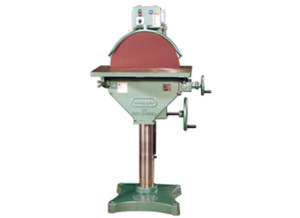
 When was the last time you were involved with a regulatory body? I can remember a time when a millwright was involved in an incident in our maintenance shop. He was using a 20″-disc grinder when the piece of steel he was grinding got caught and pulled his hand into the grinding wheel. He was off for a quite a few weeks, but he did not sustain any long-term injuries.
[Read more…]
on Maintenance Reliability
A listing in reverse chronological order of these article series:
- Usman Mustafa Syed — Aasan Asset Management series
- Arun Gowtham — AI & Predictive Maintenance series
- Miguel Pengel — Asset Management in the Mining Industry series
- Bryan Christiansen — CMMS and Reliability series
- James Reyes-Picknell — Conscious Asset series
- Alex Williams — EAM & CMMS series
- Nancy Regan — Everday RCM series
- Karl Burnett — History of Maintenance Management series
- Mike Sondalini — Life Cycle Asset Management series
- James Kovacevic — Maintenance and Reliability series
- Mike Sondalini — Maintenance Management series
- Mike Sondalini — Plant Maintenance series
- Andrew Kelleher — Process Plant Reliability Engineering series
- George Williams and Joe Anderson — The ReliabilityXperience series
- Doug Plucknette — RCM Blitz series
- Robert Kalwarowsky — Rob's Reliability Project series
- Gina Tabasso — The Intelligent Transformer Blog series
- Tor Idhammar — The People Side of Maintenance series
- André-Michel Ferrari — The Reliability Mindset series
What I’m learning about Online Training

Online training is actually a pretty good way to go! For me, that’s a revelation. The isolation and distancing measures being imposed due to the Corona Virus pandemic have been a game-changer in our business and personally. In the process of shifting training content to online formats, I’ve learned a lot.
My conclusion is that online training isn’t just an alternative to the “real thing”, it can actually be a better experience.
[Read more…]Upkeep Keynote 23FEB2021

Keynote address given for the 2021 UpKeep “The Maintenance Community” career development
[Read more…]A Mechanic’s Story: Basic Component Fatigue

In past articles, we have explored the basics of Erosion, Corrosion, Fatigue and Overload. Our emphasis has been on creating an awareness and appreciation for the value of failed components, to any investigation.
In this article we are going to delve into Fatigue a little bit more (because it is the most common fracture pattern) and see how we can use an evidence-based, deductive logic process to determine what elements of Fatigue may have been at play. We are trying to create an intellectual curiosity within the front lines about ‘making the call’…is it Fatigue, or some other fracture pattern?
[Read more…]The 15 things your new “Smart Machine” won’t tell you.

The 15 things your new “Smart Machine” won’t tell you.
1. It won’t tell you that someone failed to lubricate it
2. It won’t tell you that they put the wrong type in
3. It won’t tell you if they under filled it or overfilled it
[Read more…]What is Precision Maintenance?
Precision Maintenance May Be The Key To Unlocking Reliability
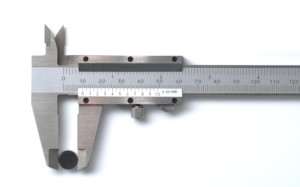 Why is it that some individuals perform a PM Routine and always find something and others don’t? And why is that when some individuals perform a rebuild or overhaul, the equipment struggles to start and return to steady state? The answer comes down to how detailed the individuals are during the maintenance activity. But how can this be overcome with such a wide range of individuals in the maintenance team? The answer is precision maintenance [Read more…]
The “new normal” can be much better

The “new normal” can be much better if we choose. Why go back to the same-old, same-old?
As we emerge from the 2020 pandemic and all the measures to contain it, your workforce will be returning to a “new normal”. What’s that? None of us really knows the details, but aside from being a cool phrase, it means being smarter and doing things differently with a great deal of awareness about disease transmission. Keeping our distance, wearing masks when ill, avoiding crowded venues, and patiently waiting for vaccines, will be a part of it, but what else will characterize the “new normal”?
[Read more…]Deeper Dive into AMS

Questions About Coefficient of Friction in Fasteners

I recently received an interesting LI inquiry that I felt others could learn from the answers that I was able to get. This is not my expertise so I sought out answers from some colleagues who were more familiar with fasteners.
Here is the original inquiry (translated from Portuguese so I hope Google Translator did a good job):
“I would like to know if you can help me clarify my doubts about:
- The purpose of conducting a study of the coefficients of friction in screws, threads and nuts?
- Is there an accurate standard for such testing?
- What methods can be perfected in projects that target this type of trial and application?
- Can surface treatments influence changes in results?
- Who is responsible for such testing (the manufacturers and suppliers of raw materials, the assembler and/or its various final assembly applications)?
The Importance of Documentation in Precision Maintenance
Why Proper Documentation Will Lead to Sustainable Improvements
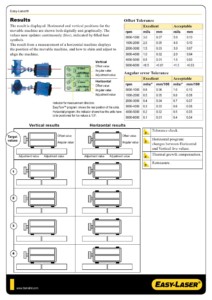 Imagine being able to look back and see what settings the equipment was last ran at for a particular SKU. Or being able to look back at the last three alignment inspections and see that slowly the alignment is drifting. What could you do with this type of information? You could perform Root Cause Analysis to see why the alignment is drifting, or trend the drifting to know when it will be out of acceptable tolerances.
Having the right information is critical to making informed decisions and driving systematic improvements in the performance of the equipment. This information is typically captured in a report or work order and should be linked to the asset and easily searchable. However, most organizations that I have worked with do not record the right information, which would allow them to make informed decisions. This documentation is a critical piece in precision maintenance, so what is required for documentation? [Read more…]
Maintenance and Reliability Maturity – 2

In part 1 of this 2 part series, “Maintenance and Reliability Maturity”, I point out that achieving the maximum value from your physical assets will require excellence in 2 main dimensions, efficiency, and effectiveness. Those are described more fully in our recent book, “Paying Your Way“. I also promised a Maintenance and Reliability Maturity Assessment tool. That tool is now available to you, our readers.
[Read more…]7 Steps of Clean, Inspect, & Lubricate

Through daily inspections, cleaning, and lubrication practices we can measure, prevent, and restore deterioration to our equipment. The expectation is that a team is put together made up of maintenance, operations, and leadership employees to roll out strategy beginning with one piece of equipment. They will implement the following 7 steps:
- Initial Cleaning
- Eliminate sources of dirt and hard to clean & inspect areas
- Create and maintain cleaning, inspection and lubrication standards
- General Inspection
- Operator Inspection
- Activities standardized
- Team Development and Operator Driven Reliability
Recognizing Basic Gear Fatigue Failure Patterns
Lets start with a fresher on general Component Fatigue.
- Fatigue occurs when a material is subjected to repeated loading and unloading.
- When the loads are above a certain threshold, microscopic cracks will begin to form at a material’s surface.
- Cracks always begin in high stressed areas of a material.
- Eventually a crack will reach a critical size, and the structure will suddenly fracture.
Allowing Wrong To Become Normal

I’ve seen it twice this year and it concerns me. In twenty years of working with companies to improve manufacturing reliability I would like to believe that those of us who care are leaving a mark. It’s the days I’m about to describe that make you wonder.
I created RCM Blitz™ over twenty years ago as a tool that would help companies identify a complete maintenance strategy to improve and achieve the inherent designed reliability of their critical assets. Prior to entering the world of consulting, I had completed and implemented several RCM (Reliability Centered Maintenance) analyses on critical assets at Eastman Kodak company. With each analysis we completed, I gained knowledge and confidence that the process when adhered to and implemented, could improve the reliability of even our worst assets. In the same two years of proving the process I also learned something very important.
[Read more…]Learn to Speak Finance
The Key To Gaining The Ear Of Your Executives
 As a maintenance professional, you spend a lot of time explaining how a proper maintenance & reliability program will improve uptime, safety, etc. But why is it that there is a hard time gaining support for the improvement initiatives? Well, senior executives are focused on how the company is being a measure of performance from the shareholders, financial analysts, or owners. Most of these measures are financial in nature, and while there are others, the primary measures are financial. [Read more…]
