Accendo Reliability

Your Reliability Engineering Professional Development Site

  • Home
  • About
    • Contributors
    • About Us
    • Colophon
    • Survey
  • Reliability.fm
    • Speaking Of Reliability
    • Rooted in Reliability: The Plant Performance Podcast
    • Quality during Design
    • CMMSradio
    • Way of the Quality Warrior
    • Critical Talks
    • Asset Performance
    • Dare to Know
    • Maintenance Disrupted
    • Metal Conversations
    • The Leadership Connection
    • Practical Reliability Podcast
    • Reliability Hero
    • Reliability Matters
    • Reliability it Matters
    • Maintenance Mavericks Podcast
    • Women in Maintenance
    • Accendo Reliability Webinar Series
  • Articles
    • CRE Preparation Notes
    • NoMTBF
    • on Leadership & Career
      • Advanced Engineering Culture
      • ASQR&R
      • Engineering Leadership
      • Managing in the 2000s
      • Product Development and Process Improvement
    • on Maintenance Reliability
      • Aasan Asset Management
      • AI & Predictive Maintenance
      • Asset Management in the Mining Industry
      • CMMS and Maintenance Management
      • CMMS and Reliability
      • Conscious Asset
      • EAM & CMMS
      • Everyday RCM
      • History of Maintenance Management
      • Life Cycle Asset Management
      • Maintenance and Reliability
      • Maintenance Management
      • Plant Maintenance
      • Process Plant Reliability Engineering
      • RCM Blitz®
      • ReliabilityXperience
      • Rob’s Reliability Project
      • The Intelligent Transformer Blog
      • The People Side of Maintenance
      • The Reliability Mindset
    • on Product Reliability
      • Accelerated Reliability
      • Achieving the Benefits of Reliability
      • Apex Ridge
      • Breaking Bad for Reliability
      • Field Reliability Data Analysis
      • Metals Engineering and Product Reliability
      • Musings on Reliability and Maintenance Topics
      • Product Validation
      • Reliability by Design
      • Reliability Competence
      • Reliability Engineering Insights
      • Reliability in Emerging Technology
      • Reliability Knowledge
    • on Risk & Safety
      • CERM® Risk Insights
      • Equipment Risk and Reliability in Downhole Applications
      • Operational Risk Process Safety
    • on Systems Thinking
      • The RCA
      • Communicating with FINESSE
    • on Tools & Techniques
      • Big Data & Analytics
      • Experimental Design for NPD
      • Innovative Thinking in Reliability and Durability
      • Inside and Beyond HALT
      • Inside FMEA
      • Institute of Quality & Reliability
      • Integral Concepts
      • Learning from Failures
      • Progress in Field Reliability?
      • R for Engineering
      • Reliability Engineering Using Python
      • Reliability Reflections
      • Statistical Methods for Failure-Time Data
      • Testing 1 2 3
      • The Hardware Product Develoment Lifecycle
      • The Manufacturing Academy
  • eBooks
  • Resources
    • Special Offers
    • Accendo Authors
    • FMEA Resources
    • Glossary
    • Feed Forward Publications
    • Openings
    • Books
    • Webinar Sources
    • Journals
    • Higher Education
    • Podcasts
  • Courses
    • Your Courses
    • 14 Ways to Acquire Reliability Engineering Knowledge
    • Live Courses
      • Introduction to Reliability Engineering & Accelerated Testings Course Landing Page
      • Advanced Accelerated Testing Course Landing Page
    • Integral Concepts Courses
      • Reliability Analysis Methods Course Landing Page
      • Applied Reliability Analysis Course Landing Page
      • Statistics, Hypothesis Testing, & Regression Modeling Course Landing Page
      • Measurement System Assessment Course Landing Page
      • SPC & Process Capability Course Landing Page
      • Design of Experiments Course Landing Page
    • The Manufacturing Academy Courses
      • An Introduction to Reliability Engineering
      • Reliability Engineering Statistics
      • An Introduction to Quality Engineering
      • Quality Engineering Statistics
      • FMEA in Practice
      • Process Capability Analysis course
      • Root Cause Analysis and the 8D Corrective Action Process course
      • Return on Investment online course
    • Industrial Metallurgist Courses
    • FMEA courses Powered by The Luminous Group
      • FMEA Introduction
      • AIAG & VDA FMEA Methodology
    • Barringer Process Reliability Introduction
      • Barringer Process Reliability Introduction Course Landing Page
    • Fault Tree Analysis (FTA)
    • Foundations of RCM online course
    • Reliability Engineering for Heavy Industry
    • How to be an Online Student
    • Quondam Courses
  • Webinars
    • Upcoming Live Events
    • Accendo Reliability Webinar Series
  • Calendar
    • Call for Papers Listing
    • Upcoming Webinars
    • Webinar Calendar
  • Login
    • Member Home
Home » LMS » 14 Ways to Acquire Reliability Engineering Knowledge » Walk around it

by Fred Schenkelberg

Walk around it

Lesson 5 of 14 Ways to Acquire
Reliability Engineering Knowledge
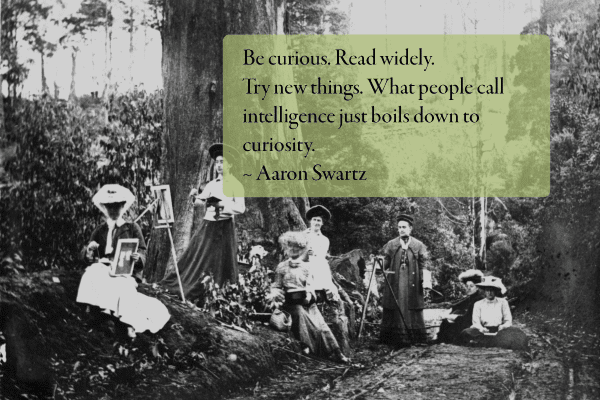
14 Ways lesson 5 image, Sketch party in a scenic location outside Brisbane, Queensland. Courtesy of State Library of Queensland, and quote by Aaron Swartz, "Be curious. Read widely. Try new things. What people call intelligence just boils down to curiosity."
Sketch party in a scenic location outside Brisbane, Queensland. Courtesy of State Library of Queensland

[show_to accesslevel=’free’ duration=’35’]


The full lesson will become available 35 days after course registration.

In the meantime, practice keeping an open mind. Note when your defense come up, and what triggered the reaction. Learn to notice when you’re shutting down a chance to learn.

Ask yourself if there is another way to view this subject or problem. It takes practice. Set reminders for yourself as you work to master this behavior.

[/show_to][hide_from visible_to=’public’]Please login with your site registration to view the lesson.

[login_form redirect=”https://fred-schenkelberg-project.prev01.rmkr.net/14-ways-acquire-reliability-engineering-knowledge/14warek-5/“]

If you haven’t registered, it’s free and takes only a moment.
[/hide_from][show_to accesslevel=’free’ delay=’35’ noaccess=’This lesson is available a week after the previous lesson.’]

Mangan tells us to keep an open mind, consider both sides from all angles, and examine each new object or situation with an open mind and be willing to learn from the many points of view. For reliability we often observe a rush to solution during failure analysis work.

Stop, walk around the problem, and examine the problem including all the information. Fully understand the problem before selecting a solution. You will no doubt learn something and likely find a better solution.

Same advice applies when interacting with your colleagues. Although physically walking around them with a steady gaze may be inappropriate, you can learn by exploring how they see the world. What is important to them about reliability? How do they fit into the reliability program?

A Motor Failure

An example may illustrate this method of learning. Consider the situation where a motor has failed within a printer. The immediate solution may be the replacement of the motor or finding a stronger motor to use as a replacement. Before replacing the failed motor, take the time to walk around it to explore why the motor failed and the cause leading to the failure. Examine the operation of the motor including:

  • the mechanical attachment and location,
  • the electrical elements and supply, and
  • the general environment, including temperature, dust, etc.

In this case we found a faulty drive circuit causing high torque and excessive heating, which leads to the failure within the motor. Replacing the motor would not address the issue and we learned by exploring around the subject and looking for the many possible stresses and interactions involved with the motor operation.

A Marble Quarry Problem

Henry Petroski in Design Paradigms: Case Histories of Error and Judgment in Engineering describes a common design team mistake for which the concept of walking around it would help solve. Petroski describes a marble quarry in ancient days commissioned to deliver a 6-m-long column in a single piece of marble. Up till this request, marble blanks were no longer than 3 m and could be safely supported off the ground with a timber placed under each end of the marble. A quarryman commented that the unsupported mid-section may be sufficient to crack the beam as it bowed under its own weight between the two supports.

The team considered the issue and, to solve the bowing problem, decided to add a third timber under the center of the column blank. In the morning the blank had a crack which ruined the piece. The crack was on the top of the beam over the center support. The team did not consider other failure mechanisms, such as uneven settling of the supporting timbers that could created a diving-board structure. Solving the bowing issue created another failure possibility.

Considering the impact on the overall system with a local change is a form of walking around it. It is a way to learn.

A Simple Tool

The cause-and-effect diagram (Ishikawa or fishbone diagram) is a tool useful when attempting to consider many elements that surround an issue or topic. To create the diagram, start with the issue (failure mode or symptom), then create a branching structure with major elements of the device, process, or category of potential causes.

Finally, off the category lines, add smaller branches for variables or detailed potential causes. The cause-and-effect diagram aids a group in considering the many potential causes for a failure. Once it is populated the next step is to consider the most likely causes and either conduct confirming experiments or explore possible controls or solutions. The diagram helps one explore and learn about possible failure causes.

Walk around it is a way to learn by being open to new information. Changing your point of view, considering alternatives, assessing the impact are all ways to prepare yourself to learn.


Next Week: Experiment

Bring out the mad scientist in you as you form hypothesis to test. Try alternatives, see what happens with a small change. For product testing, what are the limits? Have fun.

In the meantime, practice keeping an open mind. Note when your defense come up, and what triggered the reaction. Learn to notice when you’re shutting down a chance to learn.

Ask yourself if there is another way to view this subject or problem. It takes practice. Set reminders for yourself as you work to master this behavior.


*Accendo Reliability participates in the Amazon Services LLC Associates Program. This affiliate advertising program provides a way for sites to earn a commission on links to Amazon. In short, this means when you buy something on Amazon after following a link from this site, we get a small percentage of its price. This helps support Accendo Reliability by offsetting a portion of the cost to maintain the site. And, your support is much appreciated.

[/show_to]

Save time and money as you master reliability engineering.

About Fred Schenkelberg

I am the reliability expert at FMS Reliability, a reliability engineering and management consulting firm I founded in 2004. I left Hewlett Packard (HP)’s Reliability Team, where I helped create a culture of reliability across the corporation, to assist other organizations.

[hide_from visible_to="public"]Please login to have full access. [login-form] [password-recovery-link text='Lost Password? Click here to have it emailed to you.'] If you haven't registered, it's free and takes only a moment.

Site Registration

A free membership brings you:
  • Webinar recordings
  • Finding Value and Reliability Maturity ebooks
  • Additional information within podcast show notes
  • Podcast suggestion box to send us a question or topic for a future episode
  • Plus, members only events and special offers
With more in the works just for members. [/hide_from] [hide_from accesslevel="14warek"] [show_to accesslevel="Free"] Thanks for being a member [member_first_name]! To view this free member's only course, click
Start Course [/show_to][/hide_from] [show_to accesslevel="14warek"]
  • 14 Ways to Acquire Reliability Engineering Knowledge
    • Lesson 0: Introduction [/show_to] [show_to accesslevel="14warek" delay="7"]
    • Lesson 1: Practice [/show_to] [show_to accesslevel="14warek" delay="14"]
    • Lesson 2: Ask [/show_to] [show_to accesslevel="14warek" delay="21"]
    • Lesson 3: Desire [/show_to] [show_to accesslevel="14warek" delay="28"]
    • Lesson 4: Get it from yourself [/show_to] [show_to accesslevel="14warek" delay="35"]
    • Lesson 5: Walk around it [/show_to] [show_to accesslevel="14warek" delay="42"]
    • Lesson 6: Experiment [/show_to] [show_to accesslevel="14warek" delay="49"]
    • Lesson 7: Teach [/show_to] [show_to accesslevel="14warek" delay="56"]
    • Lesson 8: Read [/show_to] [show_to accesslevel="14warek" delay="63"]
    • Lesson 9: Write [/show_to] [show_to accesslevel="14warek" delay="70"]
    • Lesson 10: Listen [/show_to] [show_to accesslevel="14warek" delay="77"]
    • Lesson 11: Observe [/show_to] [show_to accesslevel="14warek" delay="84"]
    • Lesson 12: Put in Order [/show_to] [show_to accesslevel="14warek" delay="91"]
    • Lesson 13: Define [/show_to] [show_to accesslevel="14warek" delay="98"]
    • Lesson 14: Reason
[/show_to]

© 2026 FMS Reliability · Privacy Policy · Terms of Service · Cookies Policy

Book the Course with John
  Ask a question or send along a comment. Please login to view and use the contact form.
This site uses cookies to give you a better experience, analyze site traffic, and gain insight to products or offers that may interest you. By continuing, you consent to the use of cookies. Learn how we use cookies, how they work, and how to set your browser preferences by reading our Cookies Policy.
