Lesson 4 of 14 Ways to Acquire
Reliability Engineering Knowledge
[show_to accesslevel=’free’ duration=’28’]
The full lesson will become available 28 days after course registration.
In the meantime, get a notebook and pen and start ‘morning pages’. Stay with it for at least a week. Note how your day goes and if you have greater creativity and clarity.[/show_to][hide_from visible_to=’public’]Please login with your site registration to view the lesson.
[/show_to][hide_from visible_to=’public’]Please login with your site registration to view the lesson.
[login_form redirect=”https://fred-schenkelberg-project.prev01.rmkr.net/14-ways-acquire-reliability-engineering-knowledge/14warek-4/“]
If you haven’t registered, it’s free and takes only a moment.
[/hide_from][show_to accesslevel=’free’ delay=’28’ noaccess=’This lesson is available a week after the previous lesson.’]
Given all the classes you have taken though school and your professional life, it is amazing how much you have been exposed to areas across the fields of science, math, language, etc.
You really should know quite a bit. Refine and refresh what you know.
Review, recall, and relive what you already know. For reliability engineers this may include reflection, journaling, and discussions about your favorite topics from your past. You probably have a treasure trove of experiences that may provide continued insight and inspiration.
Write (draw) it out of yourself
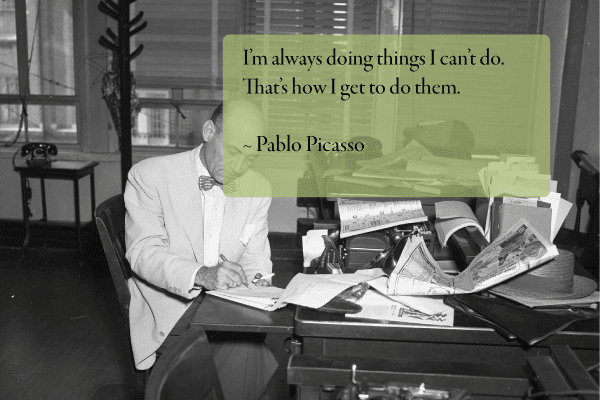
Mark Bryan, et. al. in The Artist’s Way at Work: Riding the Dragon prescribes writing longhand three pages per day each and every morning. These “morning pages” allow you to focus, explore, discuss, plan, and contemplate what is already in your head. They help you to organize your thoughts, create “to-do” lists, explore interests, formulate ideas, etc.
To start morning pages, wake up a little earlier than normal and while it is quiet write, in longhand, three standard college notebook paper pages. The writing has no goal or purpose other than to provide a stream-of-consciousness output. Write about what you are thinking.
For writing morning pages adhere to these rules:
- Always write three pages each day (not six today and none tomorrow).
- Never show them to anyone else.
- Do not reread or edit them.
- To-do lists can be included.
Another technique to learn from yourself when considering a topic is to recall previous times when you addressed similar topics. What did you learn then that may be useful today? This works well on problem-solving approaches.
You already have a wealth of knowledge. A little reflection and clarity will help you learn from what you already know.
Next Week: Walk around it
Basically keep an open mind. As needed shift your point of view or frame of reference. Maybe even actually walk around an object.
In the meantime, get a notebook and pen and start ‘morning pages’. Stay with it for at least a week. Note how your day goes and if you have greater creativity and clarity.
[/show_to]