Accendo Reliability

Your Reliability Engineering Professional Development Site

  • Home
  • About
    • Contributors
    • About Us
    • Colophon
    • Survey
  • Reliability.fm
    • Speaking Of Reliability
    • Rooted in Reliability: The Plant Performance Podcast
    • Quality during Design
    • CMMSradio
    • Way of the Quality Warrior
    • Critical Talks
    • Asset Performance
    • Dare to Know
    • Maintenance Disrupted
    • Metal Conversations
    • The Leadership Connection
    • Practical Reliability Podcast
    • Reliability Hero
    • Reliability Matters
    • Reliability it Matters
    • Maintenance Mavericks Podcast
    • Women in Maintenance
    • Accendo Reliability Webinar Series
  • Articles
    • CRE Preparation Notes
    • NoMTBF
    • on Leadership & Career
      • Advanced Engineering Culture
      • ASQR&R
      • Engineering Leadership
      • Managing in the 2000s
      • Product Development and Process Improvement
    • on Maintenance Reliability
      • Aasan Asset Management
      • AI & Predictive Maintenance
      • Asset Management in the Mining Industry
      • CMMS and Maintenance Management
      • CMMS and Reliability
      • Conscious Asset
      • EAM & CMMS
      • Everyday RCM
      • History of Maintenance Management
      • Life Cycle Asset Management
      • Maintenance and Reliability
      • Maintenance Management
      • Plant Maintenance
      • Process Plant Reliability Engineering
      • RCM Blitz®
      • ReliabilityXperience
      • Rob’s Reliability Project
      • The Intelligent Transformer Blog
      • The People Side of Maintenance
      • The Reliability Mindset
    • on Product Reliability
      • Accelerated Reliability
      • Achieving the Benefits of Reliability
      • Apex Ridge
      • Breaking Bad for Reliability
      • Field Reliability Data Analysis
      • Metals Engineering and Product Reliability
      • Musings on Reliability and Maintenance Topics
      • Product Validation
      • Reliability by Design
      • Reliability Competence
      • Reliability Engineering Insights
      • Reliability in Emerging Technology
      • Reliability Knowledge
    • on Risk & Safety
      • CERM® Risk Insights
      • Equipment Risk and Reliability in Downhole Applications
      • Operational Risk Process Safety
    • on Systems Thinking
      • The RCA
      • Communicating with FINESSE
    • on Tools & Techniques
      • Big Data & Analytics
      • Experimental Design for NPD
      • Innovative Thinking in Reliability and Durability
      • Inside and Beyond HALT
      • Inside FMEA
      • Institute of Quality & Reliability
      • Integral Concepts
      • Learning from Failures
      • Progress in Field Reliability?
      • R for Engineering
      • Reliability Engineering Using Python
      • Reliability Reflections
      • Statistical Methods for Failure-Time Data
      • Testing 1 2 3
      • The Hardware Product Develoment Lifecycle
      • The Manufacturing Academy
  • eBooks
  • Resources
    • Special Offers
    • Accendo Authors
    • FMEA Resources
    • Glossary
    • Feed Forward Publications
    • Openings
    • Books
    • Webinar Sources
    • Journals
    • Higher Education
    • Podcasts
  • Courses
    • Your Courses
    • 14 Ways to Acquire Reliability Engineering Knowledge
    • Live Courses
      • Introduction to Reliability Engineering & Accelerated Testings Course Landing Page
      • Advanced Accelerated Testing Course Landing Page
    • Integral Concepts Courses
      • Reliability Analysis Methods Course Landing Page
      • Applied Reliability Analysis Course Landing Page
      • Statistics, Hypothesis Testing, & Regression Modeling Course Landing Page
      • Measurement System Assessment Course Landing Page
      • SPC & Process Capability Course Landing Page
      • Design of Experiments Course Landing Page
    • The Manufacturing Academy Courses
      • An Introduction to Reliability Engineering
      • Reliability Engineering Statistics
      • An Introduction to Quality Engineering
      • Quality Engineering Statistics
      • FMEA in Practice
      • Process Capability Analysis course
      • Root Cause Analysis and the 8D Corrective Action Process course
      • Return on Investment online course
    • Industrial Metallurgist Courses
    • FMEA courses Powered by The Luminous Group
      • FMEA Introduction
      • AIAG & VDA FMEA Methodology
    • Barringer Process Reliability Introduction
      • Barringer Process Reliability Introduction Course Landing Page
    • Fault Tree Analysis (FTA)
    • Foundations of RCM online course
    • Reliability Engineering for Heavy Industry
    • How to be an Online Student
    • Quondam Courses
  • Webinars
    • Upcoming Live Events
    • Accendo Reliability Webinar Series
  • Calendar
    • Call for Papers Listing
    • Upcoming Webinars
    • Webinar Calendar
  • Login
    • Member Home
Home » LMS » 14 Ways to Acquire Reliability Engineering Knowledge » Ask

by Fred Schenkelberg

Ask

Lesson 2 of 14 Ways to Acquire
Reliability Engineering Knowledge
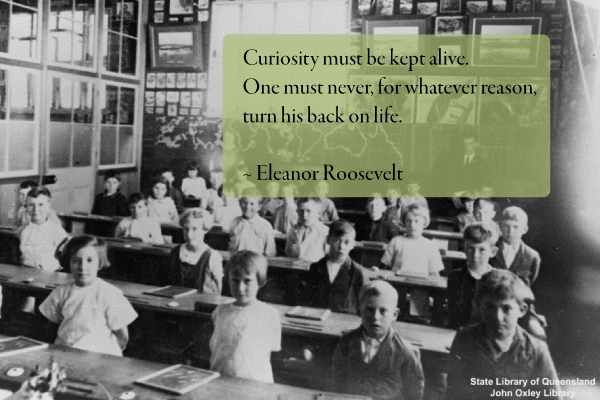
14 Ways lesson 2 image, Children inside a classroom at the Rosewood State School. Courtesy of State Library of Queensland, with Eleanor Roosevelt quote, "Curiosity must be kept alive. One must never, for whatever reason, turn his back on life."
Children inside a classroom at the Rosewood State School. Courtesy of State Library of Queensland

[show_to accesslevel=’free’ duration=’14’]


The full lesson will become available 14 days after course registration.

In the meantime, check out the Linkedin groups:

CRE Preparation – a great place to ask a question related to the ASQ CRE Body of Knowledge

ASQ Reliability Division – a place for general or specific reliability related questions.

And search on Linkedin, Google+, Facebook, and Twitter for reliability, then join the conversation. Ask some questions and answer a few, too. You get more than you put into these discussions.

[/show_to][hide_from visible_to=’public’]Please login with your site registration to view the lesson.

[login_form redirect=”https://fred-schenkelberg-project.prev01.rmkr.net/14-ways-acquire-reliability-engineering-knowledge/14warek-2/“]

If you haven’t registered, it’s free and takes only a moment.
[/hide_from][show_to accesslevel=’free’ delay=’14’ noaccess=’This lesson is available a week after the previous lesson.’]

There is no reason for the wonder of curiosity to stop. If you have a question, ask. Most likely, someone knows the answer or may provide a way to find an answer. For reliability engineers we often work alone (i.e., with no other reliability professionals on the team). Today there are forums, groups, email lists, and your list of professional contacts that are all available for a question.

You are not alone: Find the group or list of your choice and ask. It may help others to learn, too. Ask good questions.

Asking a Good Question

Be specific. Instead of asking, “What is the best accelerated test?” ask a specific question based on what you already know, such as, “Given a ball grid array solder joint fatigue failure mechanism, what is the best way to design and conduct an accelerated life test?” Be sure to define what you mean by “ best,” which could mean least expensive, quickest to get to results, most accurate, or something else in your situation.

Do not place unwarranted requirements on the request. You are requesting advice or information and rely on good will for responses. In open forums you should not expect others to do the work for you. Do your research first.

Network to Know Who to Ask

Build your network and help others solve problems. This helps to build and strengthen your network. You can ask and answer questions of your peers at technical conferences, on webinars or technical forums, or directly.

Technical conferences have paper presentations and tutorials that provide insights on how your peers approach and solve reliability problems. Furthermore, you can discuss issues, build your network, and practice asking questions. For information on reliability-related conferences (and many other events and courses) see the Reliability Calendar page.

Webinars tend to use lectures with the option to type in questions that generally receive attention. Some events encourage sending in questions before the event. See the Upcoming Reliability Webinars page.

Forums are market- and/or topic-specific discussion groups and exist on LinkedIn Groups, Yahoo Groups, Google + Communities, and trade journal or consultant websites.

An email to a colleague is direct. Unlike a group or forum an email goes to just those you address so you may have to consider whether the recipient would know the answer to your question.

A phone call or personal meeting is very direct and best for complex questions that may require a discussion.

With practice you can ask and learn a great deal about reliability engineering. Be sure to help others by answering questions, too.


Next Week: Desire

This is part setting a goal then setting out a way to achieve the goal. It’s the motivation that helps you invest in learning.

In the meantime, check out the Linkedin groups:

CRE Preparation – a great place to ask a question related to the ASQ CRE Body of Knowledge

ASQ Reliability Division – a place for general or specific reliability related questions.

And search on Linkedin, Google+, Facebook, and Twitter for reliability, then join the conversation. Ask some questions and answer a few, too. You get more than you put into these discussions.


[/show_to]

Save time and money as you master reliability engineering.

About Fred Schenkelberg

I am the reliability expert at FMS Reliability, a reliability engineering and management consulting firm I founded in 2004. I left Hewlett Packard (HP)’s Reliability Team, where I helped create a culture of reliability across the corporation, to assist other organizations.

[hide_from visible_to="public"]Please login to have full access. [login-form] [password-recovery-link text='Lost Password? Click here to have it emailed to you.'] If you haven't registered, it's free and takes only a moment.

Site Registration

A free membership brings you:
  • Webinar recordings
  • Finding Value and Reliability Maturity ebooks
  • Additional information within podcast show notes
  • Podcast suggestion box to send us a question or topic for a future episode
  • Plus, members only events and special offers
With more in the works just for members. [/hide_from] [hide_from accesslevel="14warek"] [show_to accesslevel="Free"] Thanks for being a member [member_first_name]! To view this free member's only course, click
Start Course [/show_to][/hide_from] [show_to accesslevel="14warek"]
  • 14 Ways to Acquire Reliability Engineering Knowledge
    • Lesson 0: Introduction [/show_to] [show_to accesslevel="14warek" delay="7"]
    • Lesson 1: Practice [/show_to] [show_to accesslevel="14warek" delay="14"]
    • Lesson 2: Ask [/show_to] [show_to accesslevel="14warek" delay="21"]
    • Lesson 3: Desire [/show_to] [show_to accesslevel="14warek" delay="28"]
    • Lesson 4: Get it from yourself [/show_to] [show_to accesslevel="14warek" delay="35"]
    • Lesson 5: Walk around it [/show_to] [show_to accesslevel="14warek" delay="42"]
    • Lesson 6: Experiment [/show_to] [show_to accesslevel="14warek" delay="49"]
    • Lesson 7: Teach [/show_to] [show_to accesslevel="14warek" delay="56"]
    • Lesson 8: Read [/show_to] [show_to accesslevel="14warek" delay="63"]
    • Lesson 9: Write [/show_to] [show_to accesslevel="14warek" delay="70"]
    • Lesson 10: Listen [/show_to] [show_to accesslevel="14warek" delay="77"]
    • Lesson 11: Observe [/show_to] [show_to accesslevel="14warek" delay="84"]
    • Lesson 12: Put in Order [/show_to] [show_to accesslevel="14warek" delay="91"]
    • Lesson 13: Define [/show_to] [show_to accesslevel="14warek" delay="98"]
    • Lesson 14: Reason
[/show_to]

© 2026 FMS Reliability · Privacy Policy · Terms of Service · Cookies Policy

Book the Course with John
  Ask a question or send along a comment. Please login to view and use the contact form.
This site uses cookies to give you a better experience, analyze site traffic, and gain insight to products or offers that may interest you. By continuing, you consent to the use of cookies. Learn how we use cookies, how they work, and how to set your browser preferences by reading our Cookies Policy.
